How Shockwave Therapy Helps Tendon Pain in Vaughan
How Shockwave Therapy Helps Tendon Pain in Vaughan
Tendon pain can make everyday activities difficult and uncomfortable. Whether discomfort develops because of sports injuries, repetitive movement, workplace strain, or overuse, tendon problems may gradually interfere with walking, lifting, exercising, and overall physical mobility. In many cases, untreated tendon irritation may continue worsening and eventually become chronic.
Fortunately, surgery is not always necessary for recovery. Many individuals searching for shockwave therapy Vaughan services are now choosing non-surgical rehabilitation programs to reduce tendon pain naturally and support long-term healing.
At Med Wellness Physiotherapy and Rehab Centre, patients receive personalized rehabilitation programs designed to improve mobility, reduce tendon discomfort, and support tissue recovery safely.
Understanding Tendon Pain and Tendonitis
Tendons are strong connective tissues that attach muscles to bones. These tissues help support movement and physical activity throughout the body.
However, repetitive strain, overuse, poor movement mechanics, and excessive physical stress may gradually irritate tendons and surrounding tissues.
Tendon pain may develop in many areas of the body, including:
Shoulders
Elbows
Knees
Achilles tendon
Hips
Wrists
In many situations, tendon irritation is commonly referred to as tendonitis or tendinopathy.
Common Symptoms Treated with Shockwave Therapy Vaughan Programs
Symptoms may vary depending on the location and severity of tendon irritation.
Over time, untreated tendon problems may gradually affect mobility and physical performance.
Common Causes of Tendon Pain Treatment Vaughan Patients Experience
Several lifestyle habits and physical conditions may contribute to tendon irritation.
Sports and Gym Injuries
For example, repetitive running, jumping, lifting, and overtraining may place excessive stress on tendons.
Workplace Repetitive Strain
Additionally, repetitive workplace activities may gradually irritate muscles and supporting tissues.
Poor Movement Mechanics
Improper posture and movement patterns may increase strain on specific tendons throughout the body.
Sudden Increases in Physical Activity
Meanwhile, rapidly increasing workout intensity may overload tendons and surrounding muscles.
Aging and Reduced Flexibility
In many cases, reduced flexibility and tissue recovery may contribute to chronic tendon discomfort over time.
Understanding the underlying cause of tendon pain is important because rehabilitation should address both symptoms and movement mechanics.
Why Early Chronic Tendon Pain Relief Vaughan Treatment Matters
Many people continue physical activity despite tendon discomfort. However, untreated tendon irritation may gradually worsen and become more difficult to manage.
Early rehabilitation may help:
Reduce inflammation
Improve mobility faster
Support tissue healing
Restore flexibility
Prevent worsening symptoms
Improve movement quality
Consequently, seeking professional rehabilitation early often improves recovery outcomes significantly.
What Is Shockwave Therapy Vaughan Treatment?
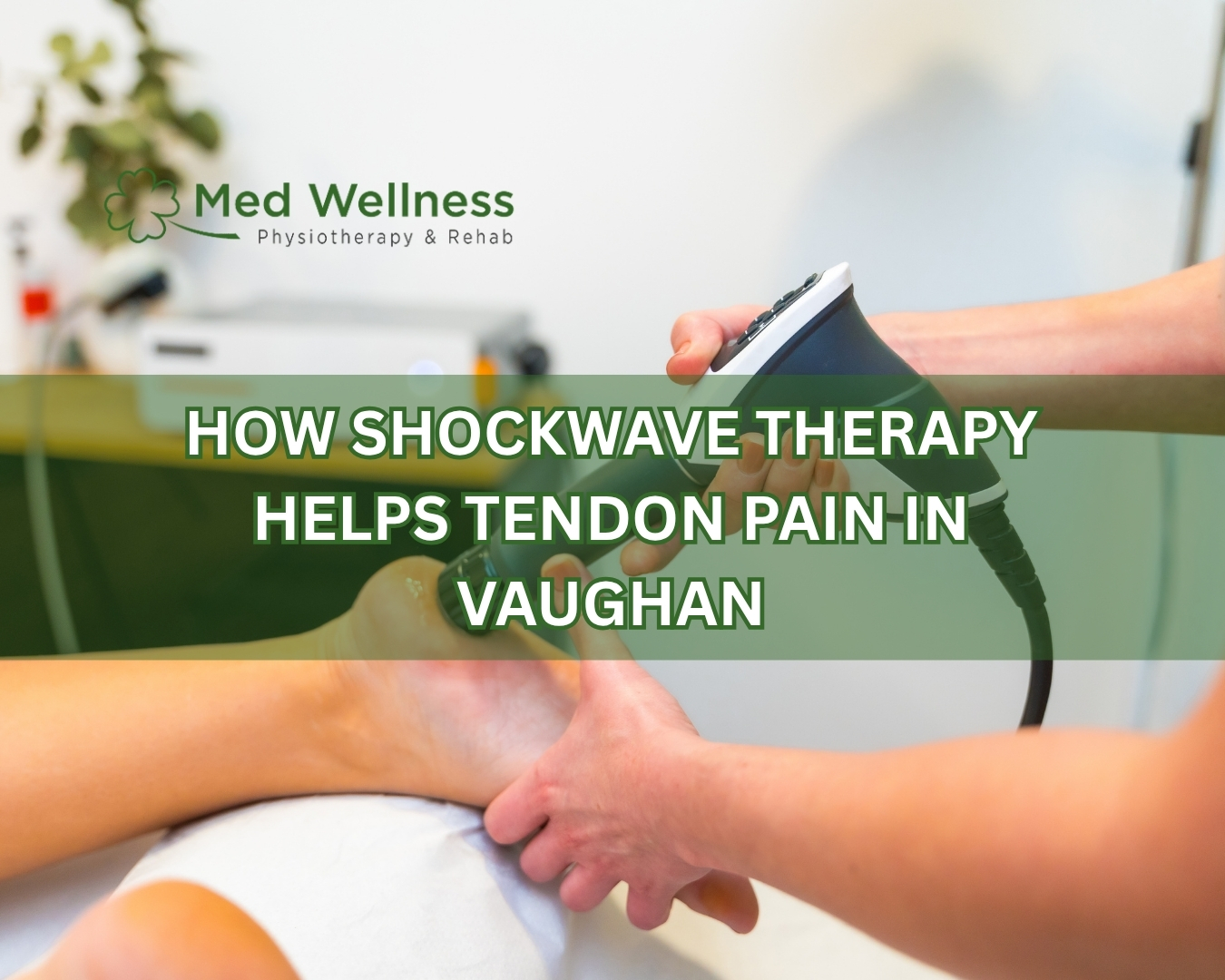
Shockwave therapy is a non-invasive treatment that uses acoustic sound waves to stimulate healing in injured tissues.
During treatment, controlled sound waves are applied directly to the affected area. As a result, the body’s natural healing response becomes more active.
Because every patient experiences tendon pain differently, customized rehabilitation is essential for effective recovery.
Massage Therapy for Muscle Tension and Recovery
Tendon pain frequently causes surrounding muscles to become tight and restricted. Because of this, massage therapy is commonly combined with physiotherapy and shockwave therapy.
Massage therapy may help:
Reduce muscle tension
Improve circulation
Improve flexibility
Support relaxation
Reduce stiffness
Improve mobility
Additionally, reducing muscle tightness may improve comfort during rehabilitation exercises and daily activities.
The Importance of Exercise Rehabilitation
Weak muscles and poor movement habits often contribute to recurring tendon pain. Therefore, rehabilitation programs frequently include strengthening and mobility exercises.
Exercise rehabilitation may help:
Improve flexibility
Improve balance
Improve movement mechanics
Reduce tendon strain
Improve physical stability
In many situations, improving muscle support significantly reduces stress on tendons during activity.
Lifestyle Tips for Preventing Tendon Pain
Healthy movement habits may support recovery and reduce injury risk.
Warm Up Before Exercise
Proper warm-up exercises may prepare muscles and tendons for activity.
Avoid Sudden Overtraining
Gradually increasing activity levels may reduce tendon stress.
Stretch Regularly
Stretching exercises may improve flexibility and mobility.
Maintain Proper Technique
Correct movement mechanics may reduce physical strain during activity.
Rest When Needed
Allowing proper recovery time may support tissue healing.
When to Seek Professional Shockwave Therapy Vaughan Services
You should consider professional rehabilitation if:
Tendon pain lasts longer than several weeks
Movement becomes uncomfortable
Exercise performance decreases
Pain worsens during activity
Swelling or stiffness increases
Home remedies are not helping
Professional assessment can help identify tendon problems and guide effective rehabilitation treatment.
FAQ About Shockwave Therapy Vaughan
Can shockwave therapy help tendon pain without surgery?
Yes. Shockwave therapy may help stimulate healing, improve circulation, and reduce chronic tendon pain naturally.
Is shockwave therapy painful?
Most patients experience mild discomfort during treatment, although intensity varies depending on the condition and treatment area.
How long does tendon rehabilitation take?
Recovery time depends on the severity of the condition, physical activity levels, and consistency with rehabilitation programs.
Professional Shockwave Therapy Vaughan Services
Recovering from tendon pain requires proper rehabilitation, guided therapy, and long-term support.
Med Wellness Physiotherapy and Rehab Centre provides shockwave therapy, physiotherapy, massage therapy, spinal therapy, and personalized rehabilitation programs for patients in Vaughan and Woodbridge.