
Modern office work has changed the way people move and use their bodies every day. Many desk workers in Vaughan and Woodbridge spend long hours sitting in front of computers, attending meetings, driving, or using mobile devices with very little physical movement throughout the day.
Over time, poor posture can place excessive strain on the neck, shoulders, spine, and surrounding muscles. Many people experience ongoing neck stiffness, lower back pain, headaches, shoulder tension, and fatigue without realizing that posture may be one of the main causes.
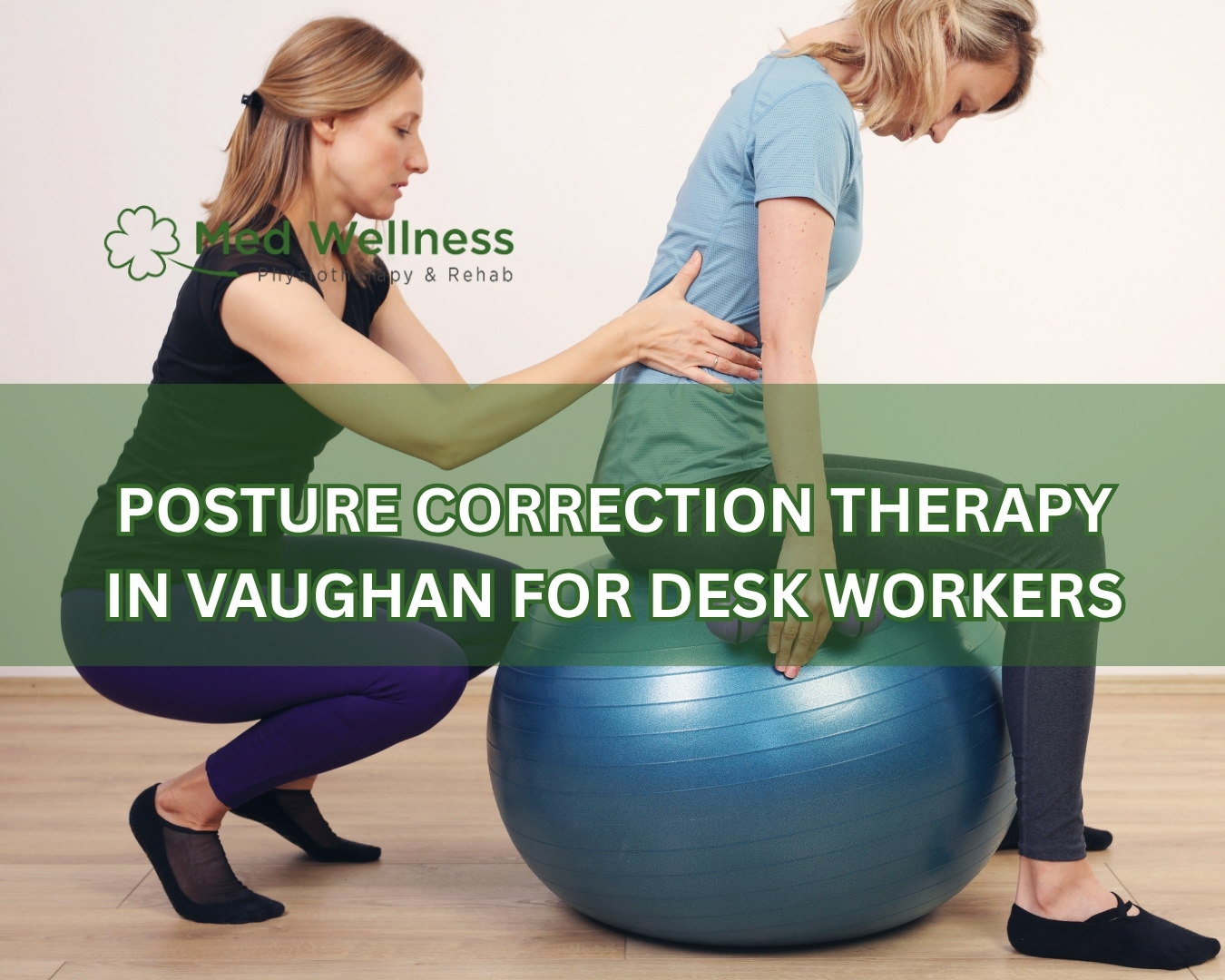
Posture correction therapy focuses on improving body alignment, reducing muscle tension, and restoring healthy movement patterns. At Med Wellness Physiotherapy and Rehab Centre in Vaughan, personalized rehabilitation programs help desk workers improve posture, reduce pain, and support long-term spinal health naturally.
Poor posture often develops gradually due to repetitive daily habits.
Common contributing factors include:
Many office workers unconsciously develop unhealthy sitting patterns that place repeated stress on the spine and muscles.
Desk workers frequently develop posture patterns such as:
The head moves forward in front of the shoulders, increasing strain on the neck muscles.
Shoulders roll forward due to prolonged computer use and tight chest muscles.
Poor sitting posture places stress on the lower back and spinal joints.
Long periods of sitting may shorten hip muscles and affect spinal alignment.
Over time, these posture problems may contribute to chronic discomfort and reduced mobility.
Poor posture may create several physical symptoms, including:
Many people notice that symptoms worsen after long workdays or extended computer use.
The spine is designed to maintain balanced alignment during movement and daily activities.
Poor posture increases stress on:
When muscles remain under constant tension for long periods, chronic pain and stiffness may gradually develop.
Proper posture helps distribute body weight more evenly and reduces unnecessary strain on muscles and joints.
Physiotherapy plays an important role in correcting posture-related problems.
A physiotherapist first performs a detailed assessment to evaluate:
Based on the assessment, a personalized posture correction program is developed.
The goal is to improve alignment, strengthen supporting muscles, and restore healthy movement patterns.
Exercise therapy is one of the most important parts of posture rehabilitation.
Posture correction exercises may help:
Programs often focus on:
Consistency with exercises is essential for long-term improvement.
Weak core muscles can increase pressure on the lower back and spine.
Core strengthening exercises help:
Stronger core muscles often reduce fatigue during long periods of sitting.
Desk workers commonly develop tight muscles in:
Stretching exercises may help:
Regular stretching throughout the workday may help reduce muscular tension buildup.
Workstation setup plays a major role in posture health.
Physiotherapists often provide ergonomic recommendations such as:
Small ergonomic adjustments may significantly reduce stress on the spine and muscles during work hours.
Spinal therapy may help improve movement in stiff spinal joints caused by prolonged sitting and poor posture.
Benefits may include:
Spinal therapy is often integrated into posture correction rehabilitation programs.
Desk workers often experience chronic muscle tightness due to stress and repetitive positioning.
Massage therapy may help:
Many patients combine massage therapy with physiotherapy and posture exercises for better long-term results.
In some chronic cases, shockwave therapy may help improve soft tissue mobility and reduce persistent muscle tension.
Shockwave therapy uses acoustic waves to:
This non-invasive treatment may benefit patients experiencing long-term muscular tension related to posture problems.
Small daily changes can significantly improve posture over time.
Helpful habits include:
Movement throughout the day is extremely important for spinal health.
You should consider professional treatment if you experience:
Early intervention may help prevent posture problems from becoming more severe over time.
Patients throughout Vaughan and Woodbridge trust Med Wellness Physiotherapy and Rehab Centre for personalized rehabilitation and posture correction therapy.
Services include:
Treatment programs are designed to improve posture, reduce pain, and support long-term spinal health naturally.
📍 110 Ansley Grove Rd, Woodbridge, ON L4L 3R1, Canada
📞 +1 905-605-8889
📧 medwellnesscentre@gmail.com
Posture correction therapy helps improve body alignment, strengthen supporting muscles, reduce tension, and support healthier movement patterns naturally.
If you are searching for posture correction therapy in Vaughan or Woodbridge, personalized physiotherapy and professional rehabilitation may help improve posture and reduce chronic discomfort safely.