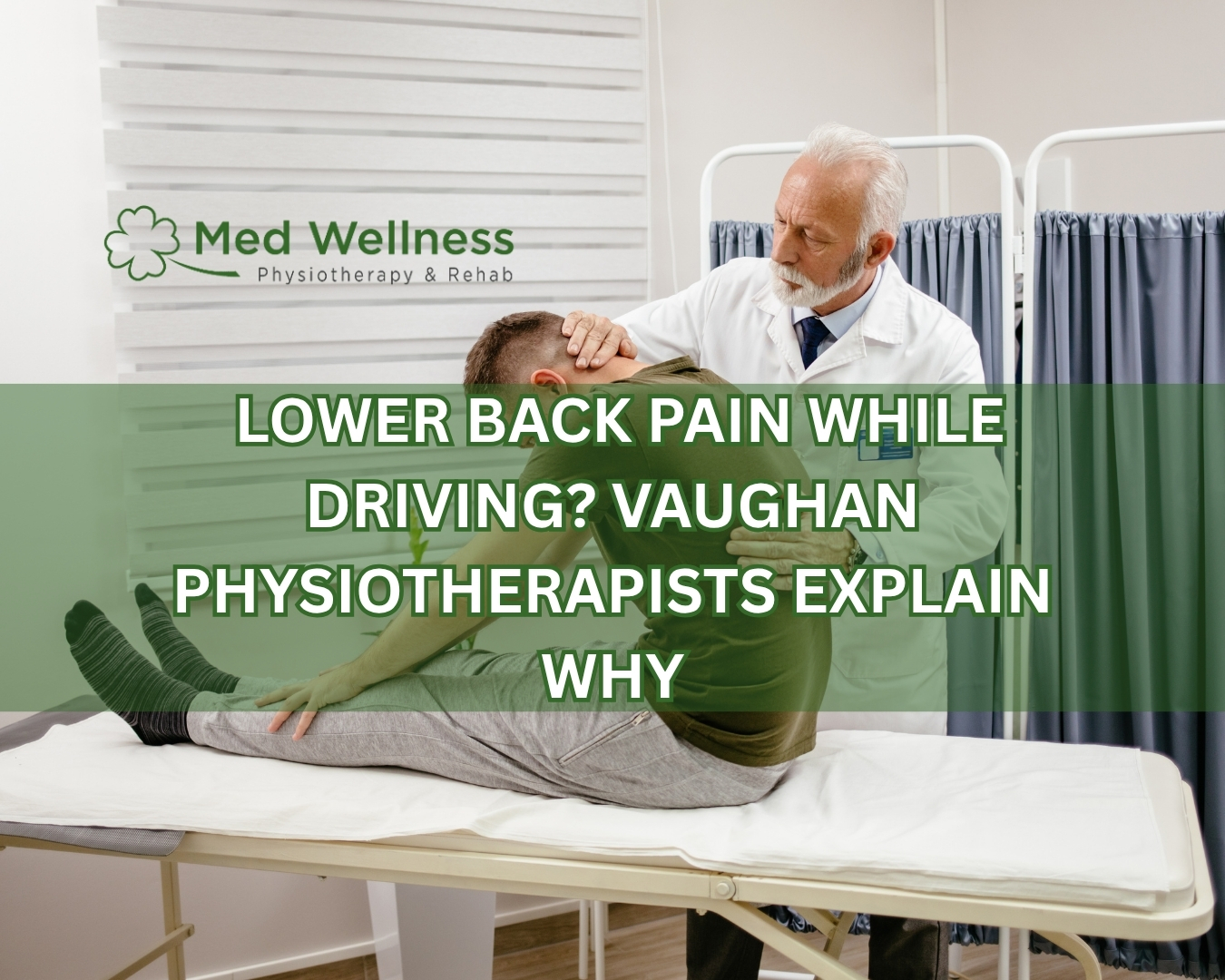
Many people in Vaughan and Woodbridge spend a large part of their day driving. Whether commuting to work, driving for business, working as a delivery driver, or spending long hours in traffic, sitting in a car for extended periods can place significant stress on the lower back.
For some people, even short drives trigger stiffness and discomfort. Others notice sharp lower back pain, muscle tightness, or sciatica symptoms after long periods behind the wheel. Over time, repeated driving-related strain may contribute to chronic back pain and reduced mobility.
Lower back pain while driving is extremely common, but it is not something people should ignore. Physiotherapy and rehabilitation can help identify the underlying causes and improve spinal health naturally.
At Med Wellness Physiotherapy and Rehab Centre in Vaughan, personalized physiotherapy and spinal rehabilitation programs help patients reduce driving-related back pain and improve long-term mobility.
Several factors contribute to back pain while driving, including:
The spine is designed for movement. Remaining seated for long periods without proper support can create excessive stress on spinal joints, discs, and surrounding muscles.
One of the biggest causes of driving-related back pain is poor posture.
Common posture mistakes include:
Poor alignment increases pressure on the lower back muscles and spinal discs over time.
Many drivers unconsciously maintain unhealthy positions for hours, especially during long commutes.
Long periods of sitting place continuous pressure on the lumbar spine.
This may lead to:
Drivers who spend several hours sitting every day often develop chronic lower back tightness and discomfort.
Frequent movement is important because prolonged sitting reduces natural spinal mobility.
Weak core muscles are another major contributor to lower back pain while driving.
The core muscles help stabilize and support the spine during movement and sitting.
Weakness in these muscles may increase strain on:
Physiotherapy often includes core strengthening exercises to improve spinal support and reduce driving-related discomfort.
Sitting for long periods shortens the hip flexor muscles at the front of the hips.
Tight hip muscles may:
Many drivers also develop tight hamstrings and glute muscles, which can further affect spinal alignment and movement patterns.
Stretching and mobility exercises may help improve flexibility and reduce tension.
People with sciatica often notice increased symptoms during driving.
Sciatica occurs when the sciatic nerve becomes irritated or compressed.
Symptoms may include:
Prolonged sitting may increase pressure on the lower spine and surrounding nerves, worsening sciatic discomfort.
Physiotherapy and spinal rehabilitation may help reduce nerve irritation and improve movement.
Road vibration and prolonged sitting can increase muscular fatigue and spinal stress.
This is especially common for:
Repeated vibration may contribute to:
Professional drivers are often at higher risk of chronic lower back problems due to long hours on the road.
Your driving posture may need correction if you experience:
Small posture changes can often make a major difference in comfort.
Physiotherapy focuses on identifying and treating the root causes of lower back pain.
A physiotherapist may evaluate:
Based on the assessment, a personalized rehabilitation program is created.
Treatment may include:
The goal is to improve spinal support and reduce stress on the lower back.
Postural correction is one of the most important parts of rehabilitation for driving-related pain.
Physiotherapists may recommend:
Improved driving posture may significantly reduce lower back stress during long trips.
Stretching exercises may help reduce muscle tightness caused by prolonged sitting.
Important areas often include:
Regular stretching throughout the day may improve flexibility and reduce stiffness.
Core strengthening exercises help support the spine during sitting and movement.
Benefits may include:
Strong core muscles are important for long-term spinal health.
Spinal therapy may help improve movement in stiff spinal joints caused by prolonged sitting.
Benefits may include:
Manual therapy techniques are often combined with exercise rehabilitation for better recovery outcomes.
Driving-related stress often creates muscle tightness in the:
Massage therapy may help:
Many patients combine massage therapy with physiotherapy for more comprehensive pain management.
Simple changes may help reduce driving-related discomfort.
Helpful strategies include:
Even small improvements in posture and mobility can support better spinal health over time.
You should consider physiotherapy if:
Early treatment may help prevent chronic spinal problems from developing.
Patients throughout Vaughan and Woodbridge trust Med Wellness Physiotherapy and Rehab Centre for personalized rehabilitation and chronic pain management.
Services include:
Treatment programs are designed to improve mobility, reduce pain, and support long-term spinal health naturally.
📍 110 Ansley Grove Rd, Woodbridge, ON L4L 3R1, Canada
📞 +1 905-605-8889
📧 medwellnesscentre@gmail.com
Lower back pain while driving is extremely common, especially for people who spend long hours sitting in vehicles every day. Poor posture, weak core muscles, tight hips, and prolonged sitting can all contribute to spinal stress and discomfort.
If you are searching for lower back pain treatment in Vaughan or Woodbridge, professional rehabilitation and personalized physiotherapy may help improve comfort, mobility, and daily function safely.