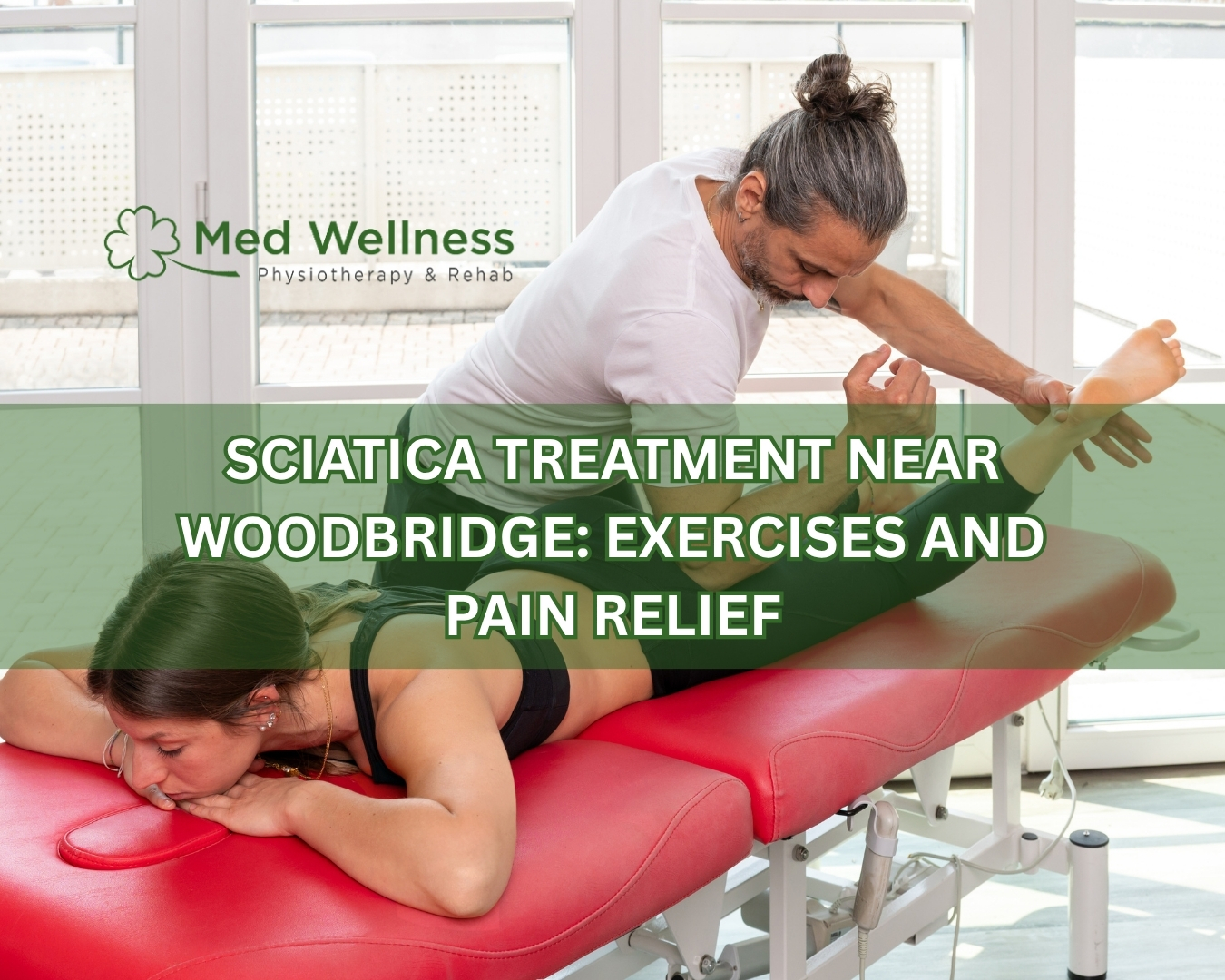
Sciatica is one of the most common causes of lower back and leg pain affecting adults in Woodbridge and Vaughan. Many people experience sharp pain, burning sensations, tingling, numbness, or discomfort radiating from the lower back down through the buttocks and legs.
For some individuals, sciatica pain appears suddenly after lifting heavy objects, prolonged sitting, or sports activity. For others, symptoms gradually worsen over time due to poor posture, spinal stress, repetitive strain, or limited mobility.
Sciatica can significantly affect:
Fortunately, many cases improve successfully through non-surgical physiotherapy, mobility rehabilitation, stretching exercises, posture correction, and movement-based treatment programs.
At Med Wellness Physiotherapy and Rehab Centre in Vaughan | Massage therapy in Vaughan | shockwave therapy, personalized rehabilitation programs help patients reduce sciatic nerve pain, improve mobility, and support long-term spinal health naturally.
Sciatica refers to pain caused by irritation or compression of the sciatic nerve, which runs from the lower spine through the hips and down the legs.
Common causes include:
Sciatica commonly produces radiating pain extending from the lower back into the leg.
Symptoms vary depending on the severity of nerve irritation.
Common symptoms include:
Some people experience symptoms on only one side of the body.
Sciatica often develops when pressure is placed on the sciatic nerve.
Contributing factors may include:
Research suggests prolonged sitting and poor movement mechanics may worsen sciatic nerve irritation.
Ignoring sciatica symptoms may lead to:
Early physiotherapy intervention often improves recovery outcomes and helps prevent worsening symptoms.
Physiotherapy is one of the most common non-surgical treatments for sciatica.
Treatment focuses on:
Physiotherapists evaluate:
A personalized rehabilitation plan is then developed according to the patient’s symptoms and mobility limitations.
Physiotherapy may help relieve pain, improve movement, and reduce future flare-ups.
Important muscle groups often include:
Regular mobility exercises are commonly recommended for sciatica rehabilitation.
This stretch helps reduce lower back tension.
Benefits may include:
Tight piriformis muscles may contribute to sciatic nerve irritation.
This stretch may help:
The piriformis stretch is frequently recommended in sciatica rehabilitation programs.
Tight hamstrings may increase stress on the lower back and pelvis.
Benefits may include:
Weak core muscles may increase stress on the lumbar spine and sciatic nerve.
Strengthening exercises may help:
Physiotherapy programs often include:
Research suggests strengthening surrounding muscles supports long-term sciatica management.
Complete bed rest is generally not recommended for sciatica.
Experts suggest that controlled movement and gentle activity often improve recovery more effectively than prolonged inactivity.
Short walks may help:
However, activities that worsen pain should be avoided.
Poor posture often contributes to spinal stress and nerve irritation.
Common posture problems include:
Posture correction therapy may help:
Desk workers and drivers commonly benefit from posture rehabilitation programs.
Spinal therapy may help improve movement in stiff spinal joints.
Benefits may include:
Spinal rehabilitation is commonly combined with physiotherapy exercises for chronic sciatica management.
Sciatica often creates tightness in surrounding muscles including:
Massage therapy may help:
Massage therapy is commonly integrated into rehabilitation programs for chronic lower back pain and nerve irritation.
Some patients with chronic muscular tightness or tendon irritation may benefit from shockwave therapy.
Shockwave therapy may help:
This non-invasive treatment is often combined with physiotherapy rehabilitation.
Healthy movement habits are important for long-term spinal health.
Helpful strategies include:
Consistency with movement habits often improves long-term recovery outcomes.
You should seek physiotherapy if you experience:
Early treatment often improves recovery outcomes and helps prevent chronic nerve irritation.
Several clinics in Vaughan and Woodbridge provide physiotherapy and rehabilitation services for sciatica treatment, including:
These clinics provide physiotherapy, spinal rehabilitation, massage therapy, chronic pain management, and mobility rehabilitation services throughout Vaughan and Woodbridge.
Patients throughout Vaughan and Woodbridge trust this clinic for personalized rehabilitation and chronic pain management.
Services include:
Treatment programs are designed to improve mobility, reduce pain, improve posture, and support long-term spinal health naturally.
📍 110 Ansley Grove Rd, Woodbridge, ON L4L 3R1, Canada
📞 +1 905-605-8889
📧 medwellnesscentre@gmail.com
Sciatica can significantly affect mobility, comfort, sleep quality, and everyday activities. Fortunately, many people improve successfully through non-surgical rehabilitation and movement-based treatment approaches.
If you are searching for sciatica treatment near Woodbridge or Vaughan, personalized rehabilitation and professional physiotherapy may help improve mobility, reduce pain, and support long-term recovery safely.