
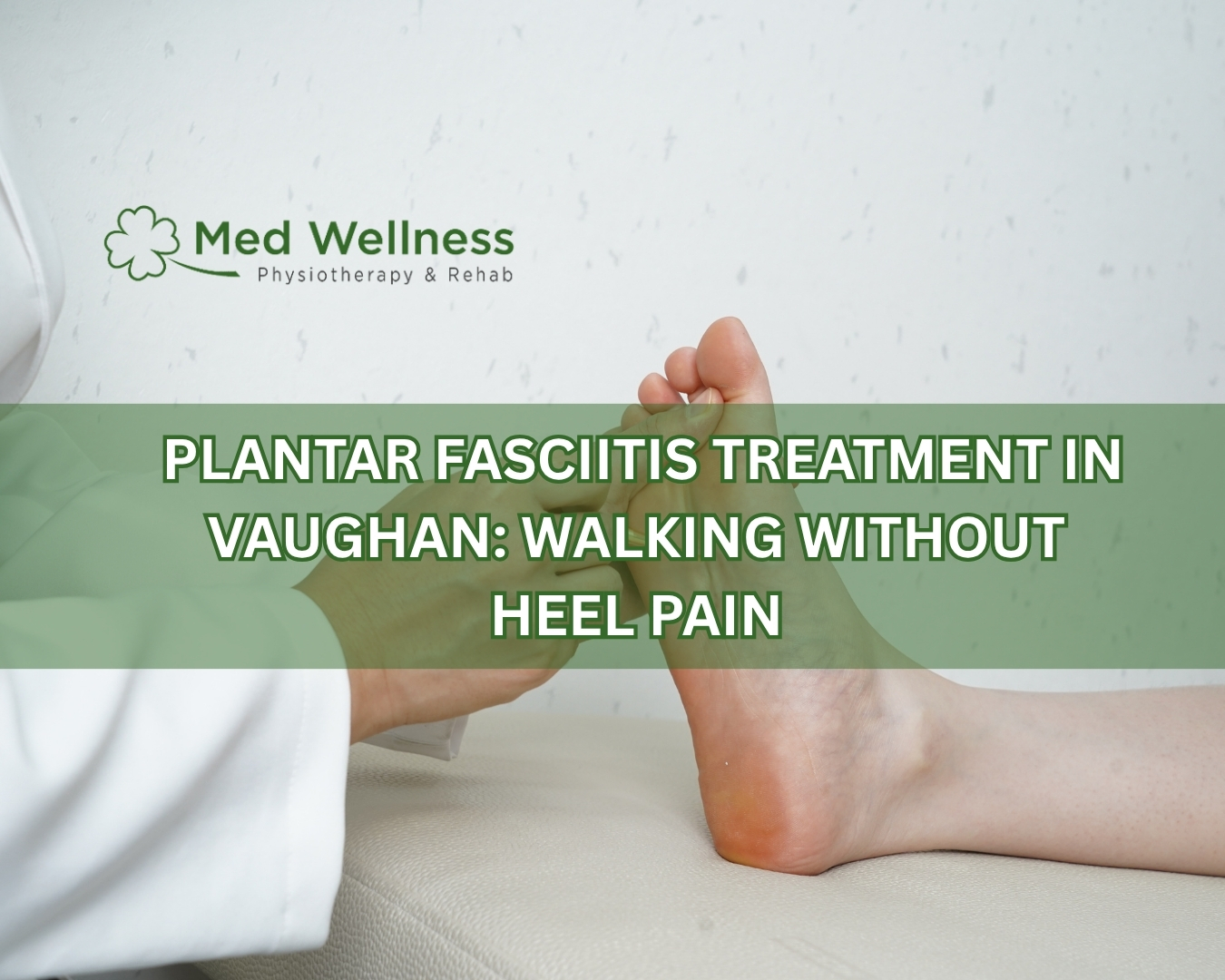
Heel pain can make simple daily activities frustrating and uncomfortable. Walking, standing, climbing stairs, exercising, or even taking the first few steps in the morning may become painful when the bottom of the foot becomes irritated and inflamed.
One of the most common causes of heel pain is plantar fasciitis. This condition affects many adults in Vaughan and Woodbridge, especially individuals who spend long hours standing, walking, running, or working on hard surfaces.
Without proper treatment, plantar fasciitis may gradually worsen and interfere with mobility, work performance, exercise routines, and overall quality of life. Fortunately, many cases improve successfully through non-surgical physiotherapy and rehabilitation.
At Med Wellness Physiotherapy and Rehab Centre in Vaughan, personalized rehabilitation programs help patients reduce heel pain, improve mobility, and support long-term recovery naturally.
Plantar fasciitis occurs when the plantar fascia becomes irritated or inflamed.
The plantar fascia is a thick band of connective tissue located along the bottom of the foot that connects the heel bone to the toes.
This tissue helps:
Repeated stress on the plantar fascia may create tiny tears and inflammation, leading to chronic heel pain.
Symptoms may develop gradually or suddenly depending on activity levels and tissue irritation.
Common symptoms include:
Many people notice that symptoms improve slightly during movement but worsen again after prolonged activity.
Several factors may increase stress on the plantar fascia.
Common causes include:
Workers who spend long periods standing on hard surfaces are especially vulnerable to developing heel pain.
Many people ignore heel pain until walking becomes difficult.
Unfortunately, untreated plantar fasciitis may lead to:
Early physiotherapy treatment often improves recovery outcomes and may prevent long-term complications.
Physiotherapy is one of the most effective non-surgical treatments for plantar fasciitis.
Treatment focuses on:
A physiotherapist first performs a detailed assessment to evaluate:
Based on the assessment, a personalized rehabilitation plan is developed.
Stretching exercises help reduce tension in the plantar fascia and surrounding muscles.
Important areas often include:
Regular stretching may help:
Consistency with stretching exercises is important for long-term improvement.
Tight calf muscles often increase stress on the plantar fascia.
This stretch may help improve flexibility and reduce tension in the lower leg and heel.
Stretching the plantar fascia directly may help reduce morning stiffness.
This stretch targets the tissue along the bottom of the foot.
Weak foot and lower leg muscles may increase stress on the plantar fascia.
Strengthening exercises may help:
Exercises are adjusted according to pain levels and mobility limitations.
The towel scrunch exercise helps strengthen small foot muscles.
This exercise may help improve foot stability and arch support.
Shockwave therapy has become a popular treatment for chronic plantar fasciitis.
The treatment uses acoustic waves to stimulate healing in damaged tissue.
Shockwave therapy may help:
Many patients experiencing long-term heel pain benefit from combining shockwave therapy with physiotherapy exercises.
Hands-on physiotherapy techniques may help improve tissue mobility and reduce stiffness.
Manual therapy may help:
Soft tissue treatment is often combined with stretching and strengthening programs.
Footwear plays a major role in heel pain management.
Poor footwear may increase stress on the plantar fascia during walking and standing.
Helpful footwear features may include:
Worn-out shoes or unsupportive footwear may worsen symptoms over time.
Poor walking patterns can place additional strain on the feet and lower limbs.
Physiotherapists often evaluate:
Improving movement patterns may help reduce repetitive stress on the plantar fascia.
Runners and active individuals frequently experience plantar fasciitis due to repetitive impact on the feet.
Sports rehabilitation programs may focus on:
Proper rehabilitation helps reduce the risk of recurring heel pain.
Simple daily habits may support recovery and reduce heel pain.
Helpful strategies include:
Small adjustments often improve long-term foot health.
You should seek professional treatment if:
Early rehabilitation often improves recovery speed and long-term outcomes.
Patients throughout Vaughan and Woodbridge trust Med Wellness Physiotherapy and Rehab Centre for personalized rehabilitation and chronic pain management.
Services include:
Treatment programs are designed to improve mobility, reduce pain, and support safe long-term recovery naturally.
📍 110 Ansley Grove Rd, Woodbridge, ON L4L 3R1, Canada
📞 +1 905-605-8889
📧 medwellnesscentre@gmail.com
Plantar fasciitis can significantly affect walking, exercise, work performance, and daily comfort. Fortunately, many patients recover successfully through non-surgical physiotherapy and rehabilitation.
If you are searching for plantar fasciitis treatment in Vaughan or Woodbridge, personalized rehabilitation and professional physiotherapy may help you return to comfortable walking safely and confidently.