Athletes place significant physical demands on their bodies. Whether participating in competitive sports, recreational activities, fitness training, or regular exercise routines, repeated stress on muscles, joints, tendons, and ligaments may increase the risk of injury over time.
Many athletes in Vaughan and Woodbridge experience sports-related injuries such as muscle strains, ligament sprains, tendon irritation, knee pain, shoulder injuries, lower back pain, and mobility limitations. Without proper rehabilitation, these injuries may worsen, delay recovery, and increase the risk of recurring problems.
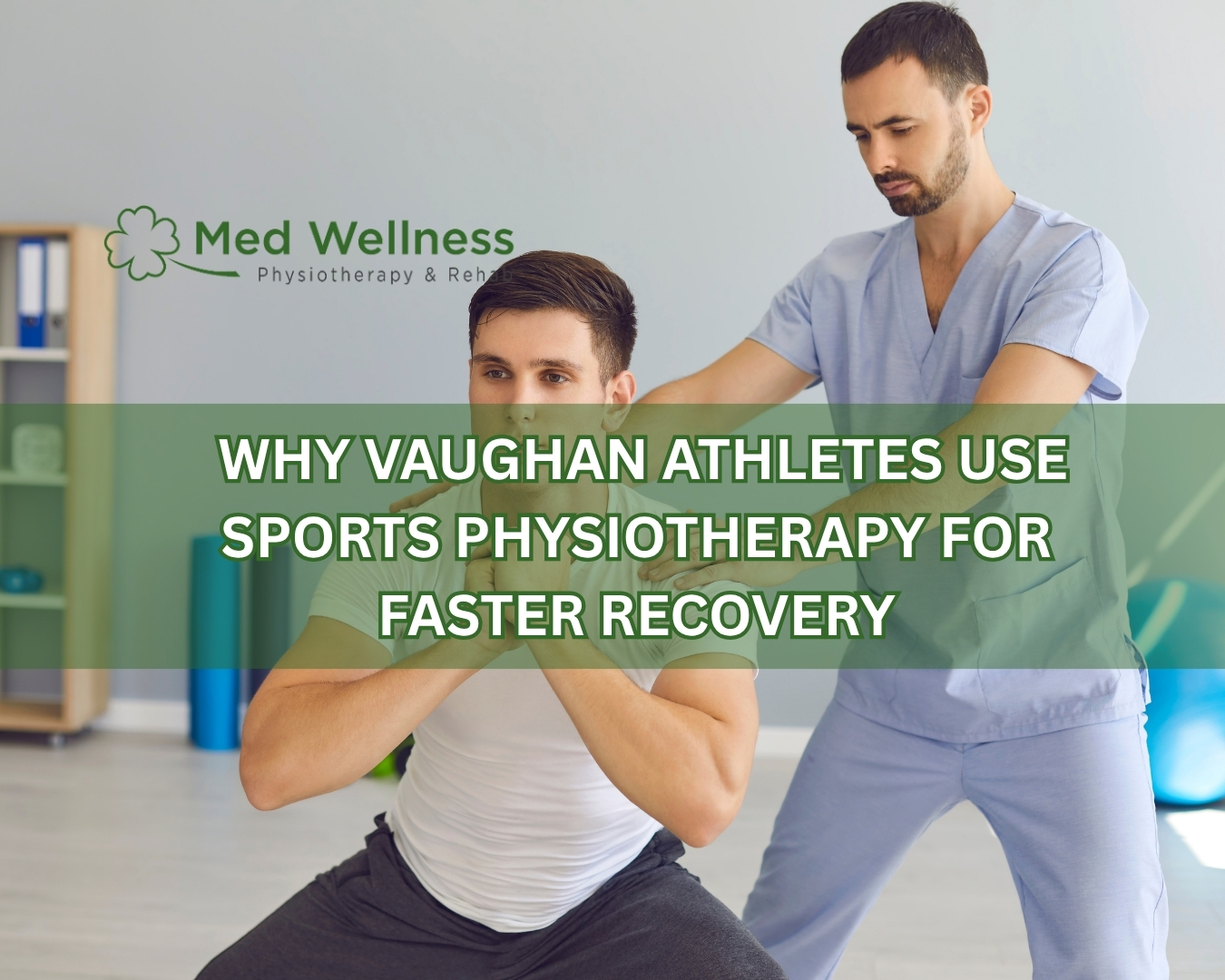
Sports physiotherapy helps athletes recover safely while improving mobility, strength, flexibility, and movement mechanics. The goal is not only pain relief but also helping athletes return to activity stronger, safer, and more prepared for future performance demands.
At Med Wellness Physiotherapy and Rehab Centre in Vaughan, sports physiotherapy and rehabilitation programs are designed to help athletes improve recovery, reduce injury risk, and support long-term physical performance naturally.
Treatment focuses on:
Sports physiotherapy is commonly used by:
Rehabilitation programs are adjusted according to the athlete’s sport, movement patterns, and recovery goals.
Athletes experience a wide range of injuries depending on the demands of their sport.
Common sports injuries include:
Early treatment is important because untreated injuries may worsen and lead to chronic pain or recurring problems.
Athletes often want to return to training and competition as quickly as possible.
However, returning too early without proper rehabilitation may increase the risk of:
Sports physiotherapy helps athletes recover safely while restoring movement quality and physical stability.
Sports physiotherapy focuses on identifying the root cause of injury and correcting movement problems contributing to pain.
A physiotherapist may assess:
Based on the assessment, a personalized rehabilitation plan is created.
Pain and inflammation are common after sports injuries.
Physiotherapy treatments may help:
Early pain management often helps athletes begin movement rehabilitation sooner.
Sports injuries often create stiffness and movement limitations.
Stretching exercises may help:
Important areas often include:
Improved flexibility may help reduce future injury risk.
Weak muscles may increase stress on joints and tendons during sports activities.
Strengthening exercises help:
Sports physiotherapy programs commonly focus on:
Strong supporting muscles help athletes move more efficiently and safely.
Every sport places different physical demands on the body.
Sports physiotherapy programs may include:
This helps athletes prepare safely for returning to training and competition.
Poor movement mechanics may contribute to repeated injuries.
Sports physiotherapists often evaluate:
Correcting movement patterns may:
Movement quality is an important part of long-term athletic health.
Some sports injuries become chronic due to repetitive stress and incomplete healing.
Shockwave therapy may help:
Shockwave therapy is commonly used for:
This non-invasive treatment is often combined with rehabilitation exercises for improved recovery.
Athletes commonly use massage therapy to support:
Sports massage may help reduce muscular tightness caused by training and repetitive movement.
Massage therapy is often integrated into physiotherapy programs for comprehensive rehabilitation support.
Athletes with neck pain, lower back stiffness, or spinal tightness may benefit from spinal therapy.
Benefits may include:
Spinal rehabilitation is commonly used for athletes experiencing repetitive strain and mobility restrictions.
One of the biggest goals of sports physiotherapy is injury prevention.
Physiotherapists help athletes:
Preventive rehabilitation often reduces the likelihood of recurring injuries during training and competition.
Sports physiotherapy also plays an important role after:
Structured rehabilitation helps athletes gradually rebuild strength and return safely to activity.
Healthy habits play an important role in sports recovery and injury prevention.
Helpful strategies include:
Consistent recovery habits often improve long-term athletic performance.
You should seek professional treatment if:
Early rehabilitation often helps athletes recover faster and avoid more severe injuries later.
Athletes throughout Vaughan and Woodbridge trust Med Wellness Physiotherapy and Rehab Centre for personalized sports rehabilitation and injury recovery programs.
Services include:
Treatment programs are designed to improve mobility, reduce pain, support faster recovery, and help athletes return safely to activity naturally.
📍 110 Ansley Grove Rd, Woodbridge, ON L4L 3R1, Canada
📞 +1 905-605-8889
📧 medwellnesscentre@gmail.com
Sports injuries can significantly affect mobility, strength, athletic performance, and confidence during physical activity. Proper rehabilitation is essential for reducing pain, improving movement, and preventing recurring injuries.
If you are searching for sports physiotherapy in Vaughan or Woodbridge, professional rehabilitation and personalized care may help improve recovery, reduce injury risk, and support long-term athletic performance naturally.