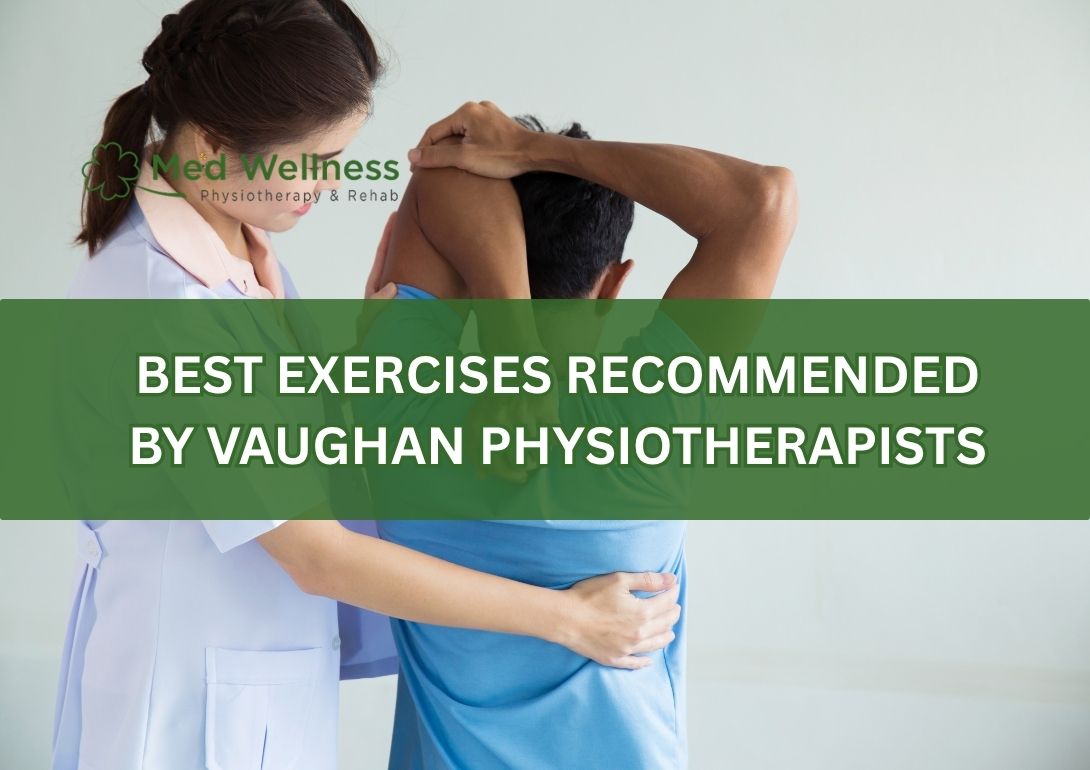
Best Exercises Recommended by Vaughan Physiotherapists

Best Exercises Recommended by Vaughan Physiotherapists

Best Exercises Recommended by Vaughan Physiotherapists

Exercise plays a major role in maintaining mobility, reducing pain, and improving overall physical health. Whether you are recovering from an injury, managing chronic pain, improving posture, or simply trying to stay active, the right exercises can help strengthen the body and prevent future problems.

Many physiotherapists recommend targeted exercises to improve flexibility, stability, posture, and muscle strength. Unlike random workout routines found online, physiotherapy-based exercises are often designed to address specific physical issues safely and effectively.

At Med Wellness Physiotherapy and Rehab Centre, physiotherapists create personalized exercise programs based on each patient’s condition, mobility level, and recovery goals.

If you are looking for the best exercises recommended by Vaughan physiotherapists, here are some commonly suggested movements that may help improve strength, flexibility, and long-term mobility.

Why Physiotherapy Exercises Matter

Physiotherapy exercises are designed to:

Regular movement helps improve blood circulation and supports healthy muscle and joint function. Inactive muscles often become weak and stiff over time, increasing the risk of pain and injuries.

The right exercises can help patients recover naturally without relying only on medications.

Stretching Exercises for Flexibility

Stretching exercises help reduce muscle tightness and improve flexibility. Physiotherapists often recommend stretching for patients experiencing:

Consistent stretching may improve movement and reduce physical tension.

Cat-Cow Stretch

The cat-cow stretch is commonly recommended for spinal mobility and posture improvement.

How to Perform:

  1. Start on your hands and knees.
  2. Slowly arch your back upward.
  3. Lower your stomach while lifting your head and chest.
  4. Repeat slowly several times.

Benefits:

  • improves spinal flexibility,
  • reduces stiffness,
  • supports posture correction,
  • helps lower back mobility.

Hamstring Stretch

Tight hamstrings can increase stress on the lower back and hips.

How to Perform:

  1. Sit with one leg extended.
  2. Reach gently toward your toes.
  3. Hold for 20–30 seconds.
  4. Repeat on both sides.

Benefits:

  • improves flexibility,
  • reduces lower back tension,
  • improves leg mobility.

Neck Stretch

Neck stretches help reduce tension caused by prolonged desk work and poor posture.

How to Perform:

  1. Sit or stand upright.
  2. Gently tilt your head toward one shoulder.
  3. Hold for 15–20 seconds.
  4. Repeat on both sides.

Benefits:

  • reduces neck stiffness,
  • improves mobility,
  • helps relieve tension headaches.

Strengthening Exercises for Better Support

Strengthening exercises help stabilize joints and improve muscle support. Weak muscles often contribute to pain, posture problems, and injuries.

Physiotherapists commonly recommend strengthening exercises for:

  • lower back support,
  • posture improvement,
  • knee stability,
  • shoulder rehabilitation,
  • injury prevention.

Pelvic Tilt Exercise

This exercise strengthens core muscles and supports spinal alignment.

How to Perform:

  1. Lie on your back with knees bent.
  2. Tighten your abdominal muscles.
  3. Flatten your lower back against the floor.
  4. Hold for a few seconds and release.

Benefits:

  • strengthens core stability,
  • supports the lower back,
  • improves posture.

Glute Bridge Exercise

Glute bridges help strengthen the hips, lower back, and core muscles.

How to Perform:

  1. Lie on your back with knees bent.
  2. Lift your hips upward slowly.
  3. Hold for a few seconds.
  4. Lower slowly and repeat.

Benefits:

  • strengthens hip muscles,
  • supports spinal stability,
  • improves posture.

Wall Sit Exercise

Wall sits are commonly recommended for leg strengthening and knee support.

How to Perform:

  1. Stand against a wall.
  2. Slide down into a seated position.
  3. Hold for 20–30 seconds.

Benefits:

  • strengthens leg muscles,
  • improves knee stability,
  • increases lower body endurance.

Exercises for Posture Correction

Poor posture is one of the leading causes of chronic neck, shoulder, and back pain. Physiotherapists often recommend posture correction exercises for office workers and individuals with sedentary lifestyles.

Chin Tuck Exercise

This exercise helps improve forward head posture caused by prolonged screen use.

How to Perform:

  1. Sit upright.
  2. Pull your chin backward gently.
  3. Hold for a few seconds.
  4. Repeat several times.

Benefits:

  • improves neck alignment,
  • reduces neck strain,
  • supports posture correction.

Shoulder Blade Squeeze

This movement strengthens upper back muscles that support posture.

How to Perform:

  1. Sit or stand upright.
  2. Pull your shoulder blades together gently.
  3. Hold for a few seconds.
  4. Repeat several times.

Benefits:

  • improves posture,
  • reduces shoulder tension,
  • strengthens upper back muscles.

Mobility Exercises for Joint Movement

Mobility exercises help maintain healthy joint movement and reduce stiffness.

Physiotherapists may recommend mobility training for:

  • arthritis,
  • post-surgery recovery,
  • sports injuries,
  • chronic stiffness,
  • aging-related mobility limitations.

Ankle Circles

Ankle mobility exercises improve circulation and joint flexibility.

How to Perform:

  1. Sit comfortably.
  2. Rotate one ankle slowly in circles.
  3. Repeat in both directions.

Benefits:

  • improves ankle flexibility,
  • supports balance,
  • reduces stiffness.

Shoulder Rolls

Shoulder mobility exercises help reduce upper body tension.

How to Perform:

  1. Roll shoulders forward slowly.
  2. Roll backward afterward.
  3. Repeat several times.

Benefits:

  • improves shoulder movement,
  • reduces muscle tension,
  • improves circulation.

Core Exercises for Lower Back Support

Core muscles support the spine and help reduce lower back stress. Weak core muscles often contribute to chronic pain and poor posture.

Bird-Dog Exercise

This exercise improves stability and balance.

How to Perform:

  1. Start on hands and knees.
  2. Extend one arm and the opposite leg.
  3. Hold briefly and switch sides.

Benefits:

  • strengthens core muscles,
  • improves balance,
  • supports spinal stability.

Plank Exercise

Planks help strengthen abdominal and back muscles.

How to Perform:

  1. Hold your body in a push-up position.
  2. Keep your core engaged.
  3. Hold for several seconds.

Benefits:

  • improves core strength,
  • supports posture,
  • stabilizes the spine.

Benefits of Guided Physiotherapy Exercises

Although general exercises can help improve fitness, physiotherapy-guided programs are safer for patients with pain or injuries.

Professional physiotherapists can:

  • identify movement limitations,
  • correct exercise form,
  • prevent reinjury,
  • adjust exercises safely,
  • track rehabilitation progress.

Personalized exercise plans are especially important for patients recovering from surgery, sports injuries, or chronic pain conditions.

When Should You See a Physiotherapist?

You should consider professional physiotherapy if you experience:

  • chronic pain,
  • stiffness,
  • poor posture,
  • sports injuries,
  • reduced mobility,
  • balance problems,
  • recurring muscle tension,
  • pain during movement.

Early treatment and guided rehabilitation often improve long-term recovery outcomes.

Why Patients Choose Med Wellness Physiotherapy and Rehab Centre

Patients searching for physiotherapy exercises and rehabilitation support in Vaughan often choose Med Wellness Physiotherapy and Rehab Centre because of its personalized rehabilitation approach and comprehensive therapy services.

The clinic offers:

  • physiotherapy,
  • rehabilitation exercises,
  • posture correction,
  • massage therapy,
  • spinal therapy,
  • shockwave therapy,
  • personalized recovery programs.

The focus is on helping patients improve movement, reduce pain naturally, and maintain long-term wellness.

Final Thoughts

The right exercises can help improve flexibility, reduce pain, strengthen muscles, and support long-term mobility. Physiotherapists recommend targeted exercises that are safe, effective, and customized based on each patient’s needs.

Whether you are managing back pain, posture problems, sports injuries, or stiffness, guided physiotherapy exercises can help improve your recovery and overall quality of life.

If you are looking for professional physiotherapy support and personalized rehabilitation exercises near Vaughan, Med Wellness Physiotherapy and Rehab Centre offers customized treatment programs designed to support safe and effective recovery.

Clinic Information

Med Wellness Physiotherapy and Rehab Centre

Address:
110 Ansley Grove Rd, Woodbridge, ON L4L 3R1, Canada

Phone:
+1 905-605-8889
Email:
medwellnesscentre@gmail.com

Website:
Med Wellness Physiotherapy and Rehab Centre