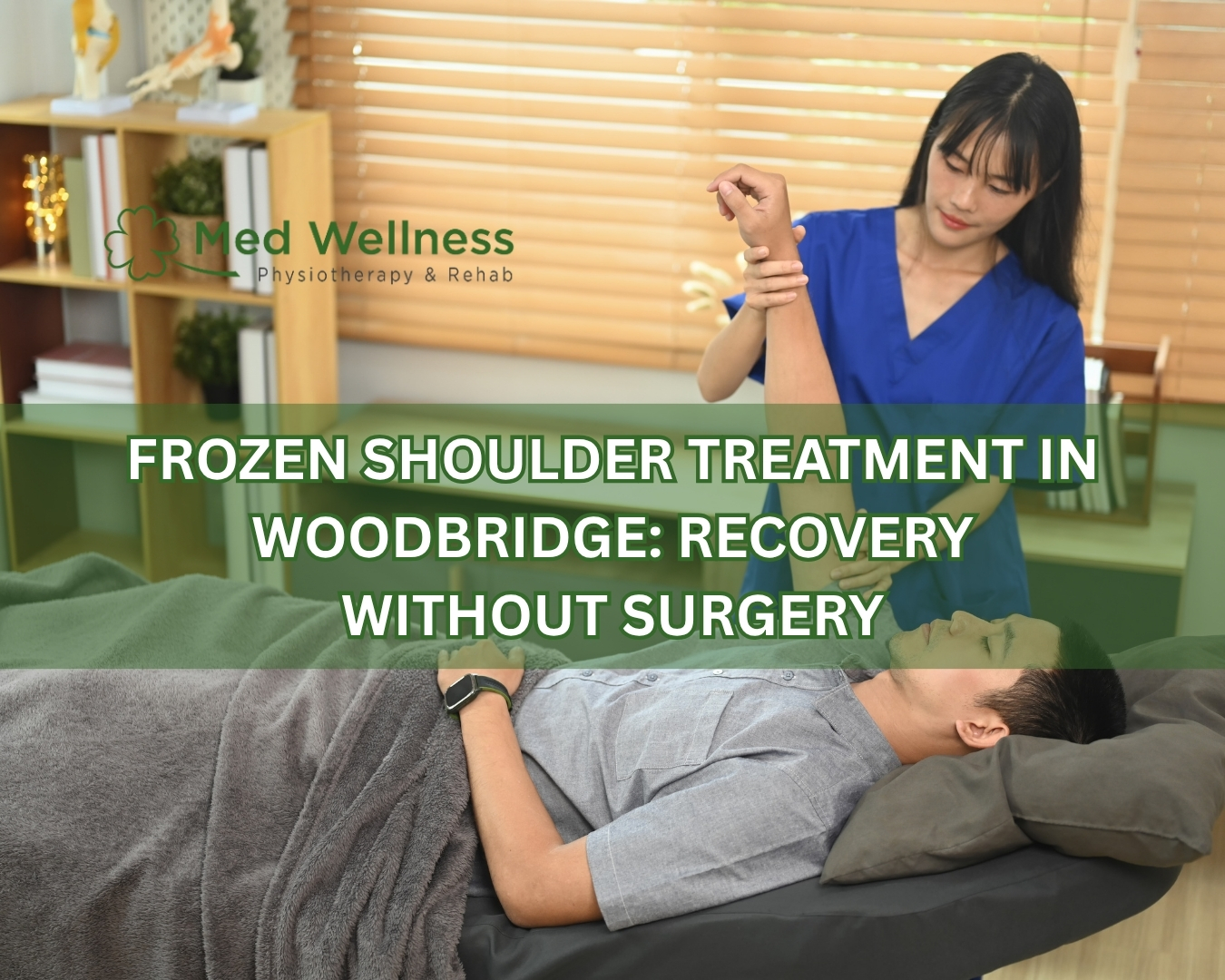
Shoulder pain and stiffness can make everyday activities extremely difficult. Simple tasks such as reaching overhead, getting dressed, driving, lifting objects, or even sleeping comfortably may become painful when shoulder movement becomes restricted.
One common condition that causes severe shoulder stiffness is frozen shoulder, also known as adhesive capsulitis. Many adults in Vaughan and Woodbridge experience this condition, especially between the ages of 40 and 60.
Frozen shoulder often develops gradually and can significantly affect mobility and quality of life if left untreated. Fortunately, many cases improve with non-surgical rehabilitation and physiotherapy treatment.
At Med Wellness Physiotherapy and Rehab Centre in Woodbridge, personalized physiotherapy and rehabilitation programs help patients reduce shoulder pain, improve mobility, and support recovery naturally.
Frozen shoulder is a condition where the shoulder joint becomes stiff, painful, and difficult to move.
The condition develops when the connective tissue surrounding the shoulder joint becomes inflamed and tight.
Over time, this may lead to:
Frozen shoulder usually develops gradually and often worsens over time if proper treatment is not started early.
Symptoms typically develop slowly and may progress through different stages.
Common symptoms include:
Many patients notice that the pain becomes worse at night or after periods of inactivity.
The exact cause is not always clear, but several factors may increase the risk of developing frozen shoulder.
Common risk factors include:
People who avoid moving the shoulder after pain or injury may be at greater risk of developing stiffness over time.
Frozen shoulder often develops in three stages.
Pain gradually increases and shoulder movement becomes more limited.
Pain may decrease slightly, but stiffness becomes more severe and mobility is highly restricted.
Shoulder movement slowly begins improving over time.
Recovery may take several months depending on the severity of the condition and consistency of rehabilitation.
Many people ignore shoulder stiffness until movement becomes severely restricted.
Delaying treatment may lead to:
Early physiotherapy treatment may help maintain mobility and reduce long-term joint restriction.
Physiotherapy is one of the most effective non-surgical treatments for frozen shoulder.
The goals of physiotherapy include:
A physiotherapist first performs a detailed assessment to evaluate:
Based on the assessment, a personalized treatment plan is created.
Mobility exercises are one of the most important parts of frozen shoulder rehabilitation.
Exercises may help:
Physiotherapists guide patients through controlled stretching and movement exercises designed to gradually improve shoulder mobility without increasing irritation.
Consistency is extremely important during recovery.
Stretching exercises help improve flexibility in the shoulder capsule and surrounding muscles.
Targeted stretching may focus on:
Gentle stretching performed regularly often supports gradual improvement in shoulder movement.
Hands-on physiotherapy techniques may help improve movement in stiff shoulder joints.
Manual therapy may help:
Combined with exercise therapy, manual techniques often improve overall rehabilitation progress.
Poor posture can increase stress on the shoulder and surrounding muscles.
Common posture problems include:
Postural correction programs may help:
Many office workers in Vaughan experience shoulder tightness related to prolonged desk work and poor workstation ergonomics.
Massage therapy may help reduce muscle tightness surrounding the shoulder and upper back.
Benefits may include:
Massage therapy is often combined with physiotherapy exercises to support recovery and improve comfort.
Shockwave therapy may be recommended for patients with chronic shoulder pain or tendon-related problems.
The treatment uses acoustic waves to:
Shockwave therapy is non-invasive and commonly used alongside rehabilitation exercises for chronic musculoskeletal conditions.
Patients recovering from frozen shoulder may benefit from:
Movement is important because prolonged inactivity may worsen stiffness.
You should seek professional treatment if:
Early intervention often improves recovery outcomes and may reduce long-term stiffness.
Patients throughout Vaughan and Woodbridge trust Med Wellness Physiotherapy and Rehab Centre for personalized rehabilitation and chronic pain management.
Services include:
Treatment programs are designed to improve mobility, reduce pain, and support safe long-term recovery naturally.
📍 110 Ansley Grove Rd, Woodbridge, ON L4L 3R1, Canada
📞 +1 905-605-8889
📧 medwellnesscentre@gmail.com
Frozen shoulder can significantly affect movement, comfort, sleep quality, and daily activities. Fortunately, many patients recover successfully through non-surgical physiotherapy and rehabilitation.
If you are searching for frozen shoulder treatment in Woodbridge or Vaughan, personalized rehabilitation and professional care may help restore movement and improve long-term shoulder function safely.