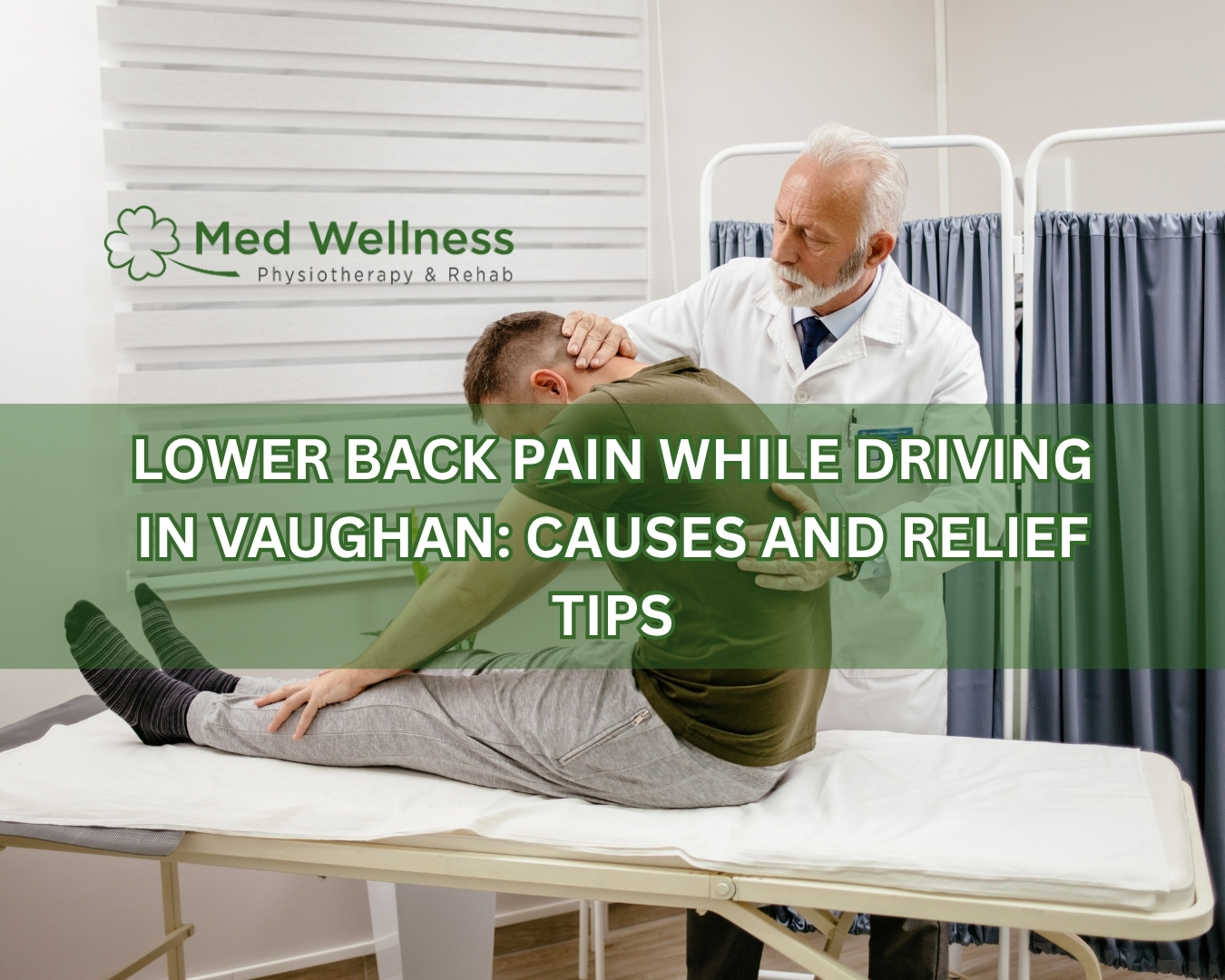
Lower back pain while driving is a common problem affecting many people in Vaughan and Woodbridge. Whether commuting to work, driving long distances, working as a delivery driver, or spending hours sitting in traffic, prolonged driving often places continuous stress on the lower spine and surrounding muscles.
Many drivers experience:
Over time, poor driving posture and prolonged sitting may contribute to chronic spinal pain, reduced mobility, and recurring discomfort during everyday activities.
Fortunately, many cases of driving-related lower back pain improve successfully through physiotherapy, posture correction, spinal rehabilitation, stretching exercises, and movement-based treatment programs.
At Med Wellness Physiotherapy and Rehab Centre in Vaughan, personalized rehabilitation programs help patients reduce lower back pain, improve posture, and support long-term spinal health naturally.
The human body is not designed to remain seated for long periods without movement.
Driving often places stress on:
Long periods sitting in a car may:
Research shows prolonged sitting increases pressure on the lumbar spine and contributes to lower back pain.
Poor posture is one of the leading causes of driving-related back pain.
Common posture problems include:
Improper sitting position increases stress on spinal muscles and joints over time.
Experts recommend maintaining neutral spinal posture while driving to reduce lumbar strain.
Long hours sitting may compress the spinal discs and increase stiffness in the lower back.
This often leads to:
Drivers who spend several hours daily sitting are especially vulnerable to chronic lower back pain.
Driving keeps the hips and knees bent for extended periods.
Over time, this may cause:
Muscle tightness often contributes to poor posture and limited spinal movement.
Stretching exercises are commonly recommended to improve flexibility and reduce stiffness.
Many drivers experience sciatica symptoms during long drives.
Sciatica occurs when the sciatic nerve becomes irritated or compressed.
Symptoms may include:
Sitting for prolonged periods may worsen sciatic nerve irritation.
Physiotherapy and posture correction often help reduce nerve-related symptoms naturally.
Symptoms may vary depending on posture, mobility, and spinal health.
Common symptoms include:
Some individuals experience symptoms only after prolonged driving, while others develop chronic daily discomfort.
Ignoring lower back pain may lead to:
Early physiotherapy intervention often improves recovery outcomes and helps prevent long-term spinal problems.
Physiotherapy is one of the most effective non-surgical treatments for lower back pain.
Treatment focuses on:
A physiotherapist evaluates:
A personalized rehabilitation program is then developed according to the patient’s symptoms and lifestyle.
Stretching exercises help reduce muscular tension caused by prolonged sitting.
Important areas often include:
Regular stretching may help:
Movement breaks and stretching are strongly recommended for people who drive frequently.
This stretch helps reduce lower back tension.
Benefits may include:
Tight hip flexors are common among drivers.
This stretch may help:
Weak core muscles increase stress on the lower spine during sitting.
Strengthening exercises may help:
Physiotherapy programs often focus on:
Strong supporting muscles help reduce repetitive spinal stress.
Simple ergonomic adjustments may significantly reduce lower back strain.
Helpful tips include:
Experts recommend maintaining neutral spinal alignment while driving.
Long drives without movement increase stiffness and muscular fatigue.
Experts recommend:
Movement helps:
Regular movement breaks are important for spinal health.
Spinal therapy may help improve movement in stiff spinal joints.
Benefits may include:
Spinal rehabilitation is commonly combined with physiotherapy exercises for chronic lower back pain management.
Massage therapy may help drivers experiencing:
Benefits may include:
Massage therapy is commonly integrated into rehabilitation programs for chronic pain management.
Healthy daily habits may significantly reduce driving-related back pain.
Helpful strategies include:
Consistency with movement habits often improves long-term spinal health.
You should seek physiotherapy if you experience:
Early treatment often improves recovery outcomes and helps prevent chronic spinal conditions.
Several clinics in Vaughan and Woodbridge provide physiotherapy and rehabilitation services for lower back pain, including:
These clinics provide physiotherapy, posture correction, spinal rehabilitation, massage therapy, and chronic pain management services throughout Vaughan and Woodbridge.
Patients throughout Vaughan and Woodbridge trust Med Wellness Physiotherapy and Rehab Centre for personalized rehabilitation and chronic pain management.
Services include:
Treatment programs are designed to improve mobility, reduce pain, improve posture, and support long-term spinal health naturally.
📍 110 Ansley Grove Rd, Woodbridge, ON L4L 3R1, Canada
📞 +1 905-605-8889
📧 medwellnesscentre@gmail.com
Lower back pain while driving is extremely common due to prolonged sitting, poor posture, reduced movement, and muscular tightness. Without proper treatment, driving-related spinal stress may gradually contribute to chronic pain and reduced mobility.
If you are searching for lower back pain treatment in Vaughan or Woodbridge, personalized rehabilitation and professional physiotherapy may help improve comfort, posture, and mobility safely.