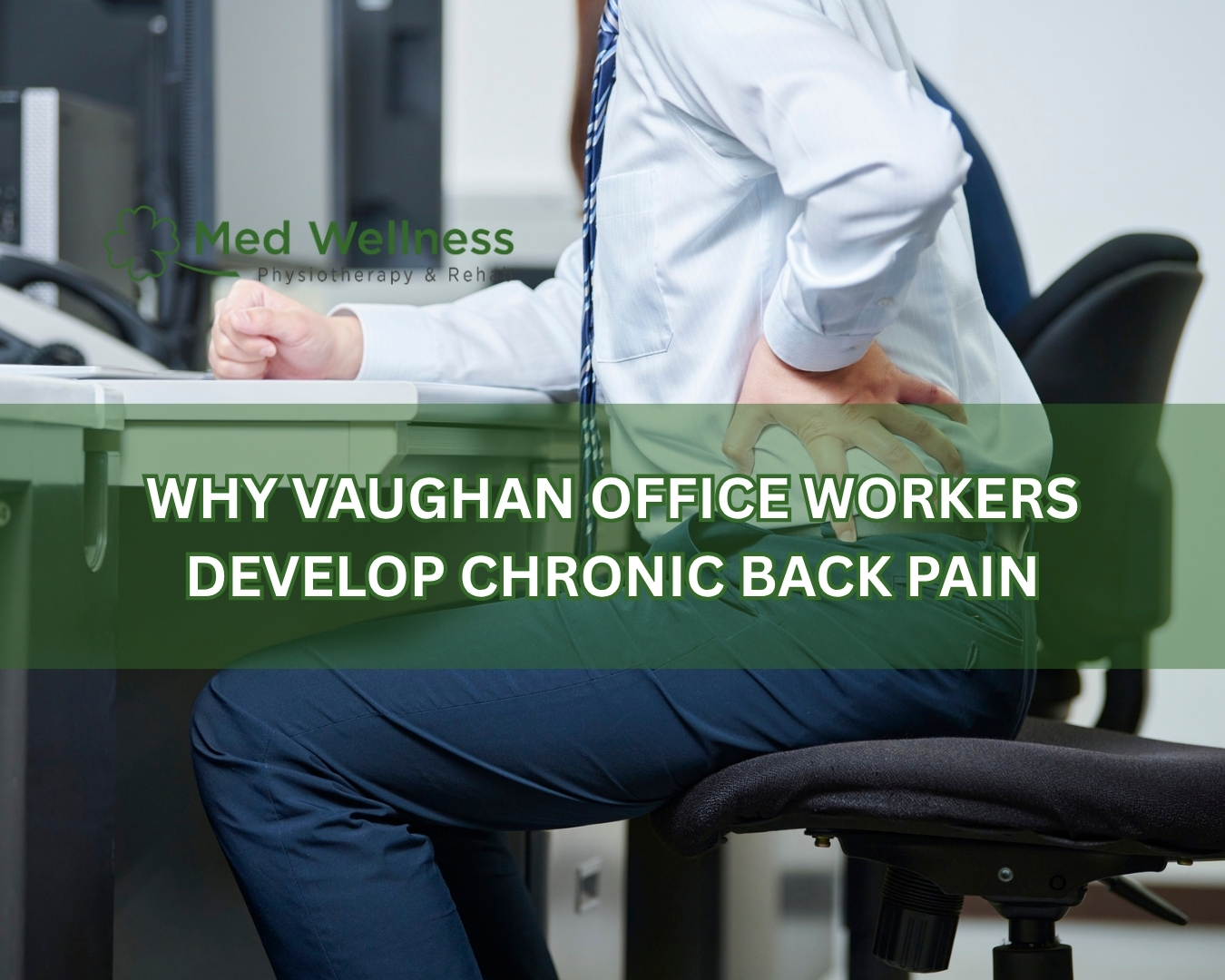
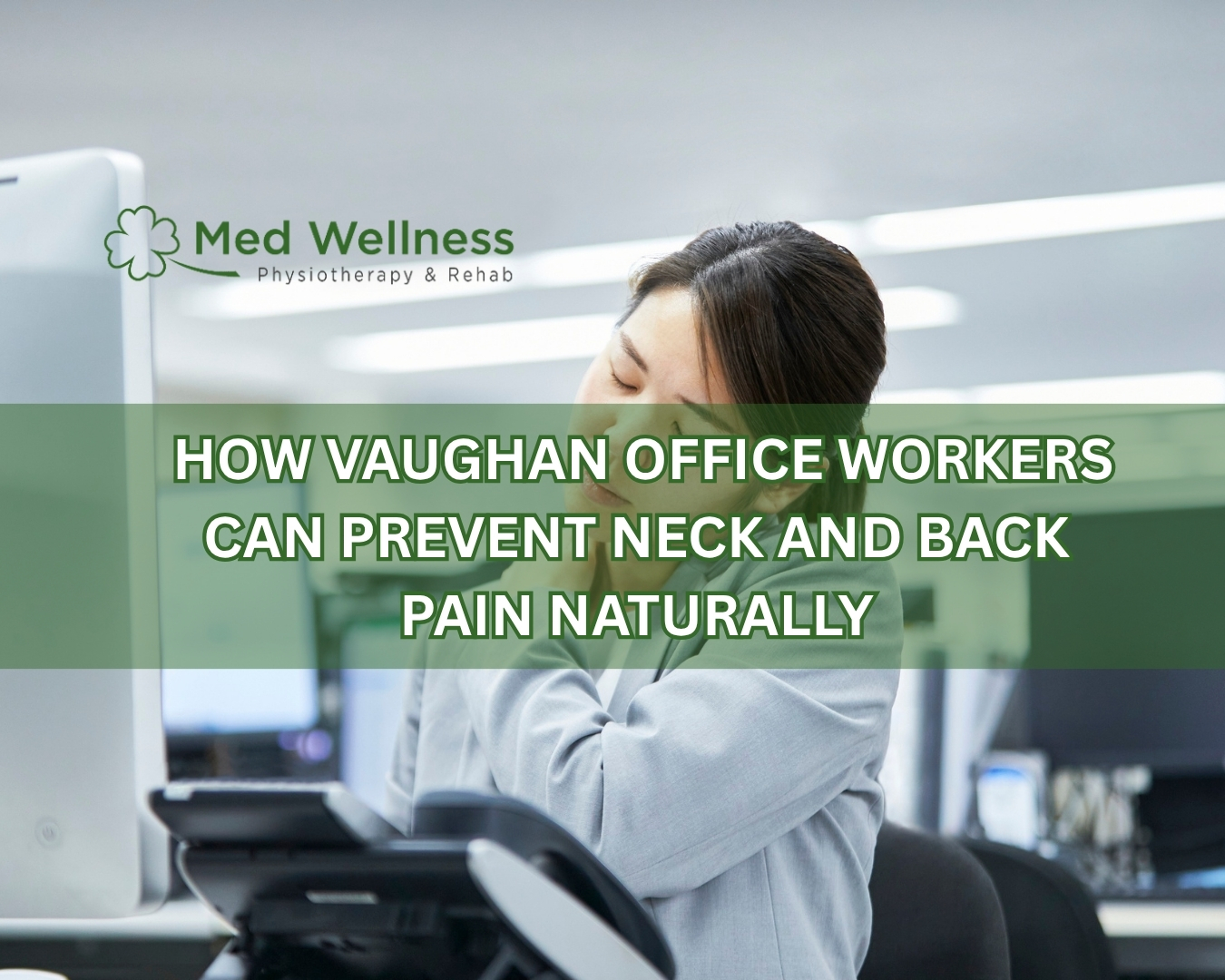
Modern office jobs require many people to spend long hours sitting at desks, working on computers, attending virtual meetings, and using mobile devices throughout the day. While office work may seem less physically demanding than manual labor, prolonged sitting and poor posture can place significant stress on the spine, muscles, and joints.
Many office workers in Vaughan and Woodbridge experience chronic neck pain, shoulder tension, lower back stiffness, headaches, and posture-related discomfort caused by repetitive daily habits. Over time, these problems may affect productivity, mobility, sleep quality, and overall health.
The good news is that many posture-related pain conditions can be prevented naturally through proper movement habits, ergonomic improvements, stretching, strengthening exercises, and physiotherapy support.
At Med Wellness Physiotherapy and Rehab Centre in Vaughan, personalized rehabilitation and posture correction programs help office workers reduce spinal stress, improve mobility, and support long-term physical wellness naturally.
The human body is designed for movement, not prolonged sitting.
When people remain seated for several hours each day, muscles and joints may become stiff and overloaded. Poor posture during computer work further increases strain on the spine and surrounding muscles.
Common contributors to office-related pain include:
Over time, these habits may create chronic muscle imbalance and spinal stress.
Sitting for extended periods places increased pressure on the lumbar spine and hip muscles.
Long periods of sitting may contribute to:
Many office workers unknowingly sit in poor positions for hours without changing posture or moving regularly.
Even good posture becomes stressful when maintained for too long without movement.
One of the biggest causes of neck pain in office workers is forward head posture, often called “tech neck.”
This happens when the head moves forward during:
Forward head posture places excessive strain on:
Over time, poor posture may lead to:
Posture correction is extremely important for long-term spinal health.
Core muscles support and stabilize the spine during sitting, standing, and movement.
Weak core muscles may increase pressure on:
Office workers who spend most of the day sitting often develop poor core stability, which contributes to back pain and posture problems.
Strengthening the core may help:
Sitting for long periods may shorten and tighten certain muscles while weakening others.
Common tight muscles include:
At the same time, muscles that often become weak include:
These imbalances may gradually affect posture and increase stress on the spine.
Proper workstation setup is one of the most important ways to prevent office-related pain.
Helpful ergonomic adjustments include:
Small ergonomic improvements may significantly reduce stress on the neck and lower back.
The body responds better to regular movement than prolonged static positions.
Office workers should aim to:
Movement helps:
Even short movement breaks may help reduce spinal fatigue.
Stretching exercises help reduce tension caused by prolonged sitting and computer use.
Important areas to stretch include:
Stretching may help:
Consistent stretching is important for preventing muscular tightness buildup.
Strengthening exercises help support healthy spinal alignment and movement.
Helpful exercise areas include:
Strengthening weak muscles may help:
Exercise programs should be adjusted according to the individual’s mobility and pain level.
Physiotherapy is highly effective for posture-related neck and back pain.
A physiotherapist evaluates:
Based on the assessment, a personalized treatment plan may include:
The goal is to improve movement and reduce long-term spinal stress naturally.
Spinal therapy may help improve mobility in stiff spinal joints caused by prolonged sitting and poor posture.
Benefits may include:
Spinal rehabilitation is often integrated into posture correction programs.
Stress often contributes to muscle tightness in office workers.
Massage therapy may help:
Many patients combine massage therapy with physiotherapy and stretching exercises for more comprehensive relief.
In some chronic cases, shockwave therapy may help reduce persistent muscle tension and soft tissue tightness.
Shockwave therapy uses acoustic waves to:
This non-invasive treatment may support rehabilitation for chronic posture-related discomfort.
Simple daily habits may significantly reduce neck and back pain risk.
Helpful strategies include:
Consistency with healthy movement habits often produces long-term benefits.
You should consider physiotherapy if you experience:
Early treatment often helps prevent chronic pain conditions from worsening.
Patients throughout Vaughan and Woodbridge trust Med Wellness Physiotherapy and Rehab Centre for personalized rehabilitation and posture correction therapy.
Services include:
Treatment programs are designed to improve posture, reduce pain, and support long-term spinal health naturally.
📍 110 Ansley Grove Rd, Woodbridge, ON L4L 3R1, Canada
📞 +1 905-605-8889
📧 medwellnesscentre@gmail.com
Office workers spend many hours sitting each day, which can gradually contribute to neck pain, back pain, muscle tightness, and posture-related discomfort. Poor ergonomics, weak core muscles, and lack of movement are some of the most common causes.
If you are searching for physiotherapy or posture correction therapy in Vaughan or Woodbridge, personalized rehabilitation and professional care may help improve mobility, reduce pain, and support healthier long-term movement safely