Sciatica is one of the most common causes of lower back and leg pain affecting adults in Vaughan and Woodbridge. The condition can make simple daily activities such as sitting, walking, driving, or bending extremely uncomfortable.
Many people describe sciatica pain as sharp, burning, tingling, or shooting discomfort that travels from the lower back down into the leg. In some cases, the pain becomes severe enough to interfere with work, sleep, exercise, and normal movement.
The good news is that many sciatica cases can be treated successfully without surgery. Physiotherapy, spinal therapy, targeted exercises, and rehabilitation programs can help reduce nerve irritation and improve mobility naturally.
At Med Wellness Physiotherapy and Rehab Centre near , personalized and recover safely through treatment approaches.
Sciatica occurs when the sciatic nerve becomes irritated or compressed.
When pressure affects the nerve, symptoms may include:
Sciatica is usually a symptom of an underlying spinal or muscular problem rather than a condition itself.
Several conditions may place pressure on the sciatic nerve.
Common causes include:
Spinal discs may press against nearby nerves, creating pain and inflammation.
Long hours of sitting and poor spinal alignment increase pressure on the lower back.
Tight muscles in the lower back or hips may irritate the sciatic nerve.
Age-related spinal wear and tear can narrow spaces around nerves.
Heavy lifting, repetitive bending, or physically demanding jobs may increase spinal stress.
Athletic activities sometimes lead to lower back injuries affecting nerve function.
Identifying the underlying cause is important for developing an effective treatment plan.
Sciatica symptoms vary from person to person.
Some people experience mild discomfort, while others struggle with severe pain and mobility problems.
Symptoms may include:
Symptoms often affect only one side of the body.
If symptoms become severe or persistent, professional treatment is recommended.
Many people wait too long before seeking treatment for sciatica.
Ignoring symptoms may lead to:
Early physiotherapy and rehabilitation can help reduce nerve pressure before symptoms become more severe.
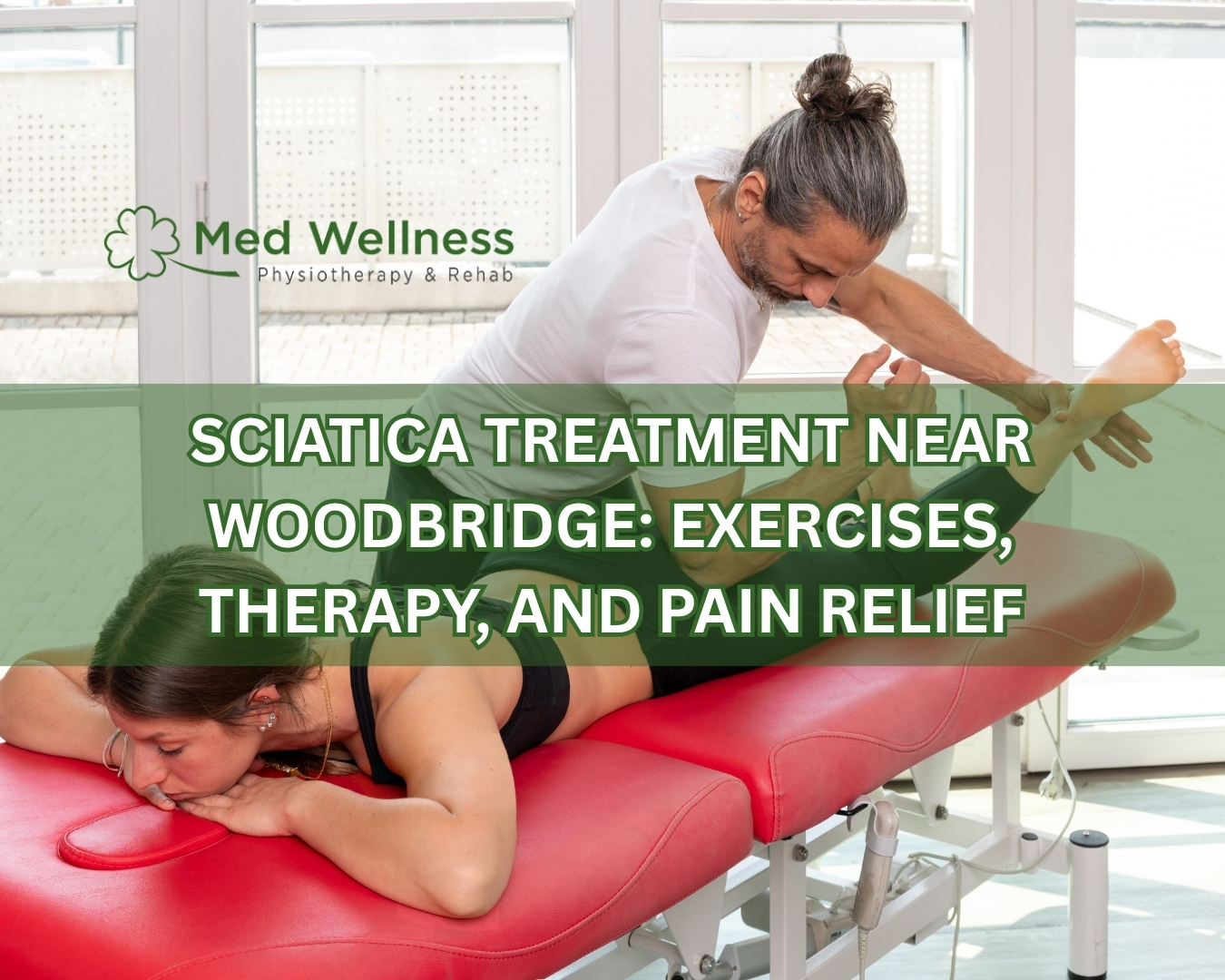
Physiotherapy is one of the most effective non-surgical treatments for sciatica.
Treatment focuses on:
A physiotherapist first performs a detailed assessment to identify movement limitations and possible causes of sciatic nerve compression.
Treatment plans are then customized based on the patient’s symptoms and condition severity.
Specific exercises may help reduce pressure on the sciatic nerve and improve mobility.
Below are some common exercise approaches used in sciatica rehabilitation.
Stretching tight muscles may help reduce tension affecting the sciatic nerve.
Common areas targeted include:
Stretching exercises are usually performed carefully to avoid increasing nerve irritation.
Weak core muscles can increase stress on the lower spine.
Core exercises help:
Stronger supporting muscles often reduce pressure on spinal structures.
Restricted movement patterns can worsen sciatic symptoms.
Mobility exercises may help:
Physiotherapists adjust exercises depending on pain levels and mobility limitations.
Poor posture is a major contributor to sciatica pain, especially for office workers and drivers.
Postural training may include:
Correct posture reduces unnecessary stress on the spine and nerves.
Spinal therapy can help improve movement in stiff spinal joints and reduce pressure around irritated nerves.
Benefits may include:
When combined with physiotherapy, spinal therapy may help improve recovery outcomes for many patients.
Muscle tightness often contributes to sciatic nerve irritation.
Massage therapy may help:
Many patients combine massage therapy with physiotherapy exercises for better overall pain management.
In some chronic cases, shockwave therapy may help reduce soft tissue tension and improve healing.
Shockwave therapy uses acoustic waves to stimulate tissue recovery and improve blood circulation.
It may help patients experiencing:
Treatment is non-invasive and often integrated into rehabilitation programs.
Daily habits can significantly affect sciatica symptoms.
Simple lifestyle improvements may include:
Small changes often support better spinal health over time.
You should seek professional treatment if:
Early intervention can often prevent long-term complications.
Patients across Vaughan and Woodbridge trust Med Wellness Physiotherapy and Rehab Centre for personalized rehabilitation and chronic pain management.
Services include:
Treatment programs are designed to improve mobility, reduce pain, and support safe long-term recovery.
📍 110 Ansley Grove Rd, Woodbridge, ON L4L 3R1, Canada
📞 +1 905-605-8889
📧 medwellnesscentre@gmail.com
Physiotherapy, spinal therapy, massage therapy, and targeted exercises can help reduce nerve irritation and support long-term recovery naturally.
If you are searching for near or Vaughan, professional assessment and personalized rehabilitation may help you return to normal activities safely and comfortably.