Sciatica pain can make everyday activities difficult. Simple movements like sitting, walking, bending, or getting out of bed may become painful and uncomfortable. For many people, sciatica starts as mild lower back discomfort and gradually develops into sharp pain that travels down the leg.
This condition affects thousands of people every year, especially office workers, drivers, athletes, and individuals with physically demanding jobs. Fortunately, non-surgical treatments such as physiotherapy, spinal therapy, massage therapy, and guided exercises can help manage symptoms and improve recovery.
At Med Wellness Physiotherapy and Rehab Centre, patients receive personalized sciatica treatment plans designed to reduce pain, improve mobility, and support long-term recovery naturally.
If you are searching for effective sciatica treatment in Vaughan, understanding the causes, symptoms, exercises, and therapy options can help you take the right steps toward relief.
What Is Sciatica?
Sciatica refers to pain caused by irritation or compression of the sciatic nerve, which is the largest nerve in the body. The sciatic nerve starts in the lower back and travels through the hips, buttocks, and legs.
When the nerve becomes compressed or inflamed, it can cause:
- lower back pain,
- sharp leg pain,
- numbness,
- tingling sensations,
- muscle weakness,
- burning pain,
- difficulty standing or walking.
Sciatica usually affects one side of the body and may range from mild discomfort to severe pain.
Common Causes of Sciatica
Several conditions may trigger sciatica symptoms. The most common causes include:
Herniated Disc
A slipped or herniated disc can place pressure on the sciatic nerve, leading to pain and inflammation.
Poor Posture
Long hours sitting at a desk or using improper lifting techniques may increase spinal stress.
Muscle Tightness
Tight muscles in the lower back or hips can irritate nearby nerves and contribute to sciatica pain.
Spinal Degeneration
Age-related spinal changes may narrow the spaces around nerves and cause compression.
Workplace Injuries
Heavy lifting, repetitive movements, and prolonged sitting can increase the risk of lower back injuries.
Common Symptoms of Sciatica
Sciatica symptoms vary from person to person. Some patients experience occasional discomfort, while others develop severe nerve pain.
Typical symptoms include:
- pain radiating from the lower back to the leg,
- sharp or burning pain,
- numbness in the leg or foot,
- tingling sensations,
- weakness in the leg muscles,
- pain while sitting,
- discomfort when standing up,
- reduced mobility.
Symptoms may worsen after long periods of sitting or physical activity.
Why Early Treatment Is Important
Ignoring sciatica symptoms may lead to chronic pain and mobility problems over time. Early treatment helps reduce nerve irritation before the condition worsens.
Professional rehabilitation can:
- reduce inflammation,
- improve mobility,
- restore muscle strength,
- improve posture,
- prevent recurring pain,
- reduce pressure on the sciatic nerve.
Patients who begin treatment early often recover faster and experience better long-term results.
Physiotherapy for Sciatica in Vaughan
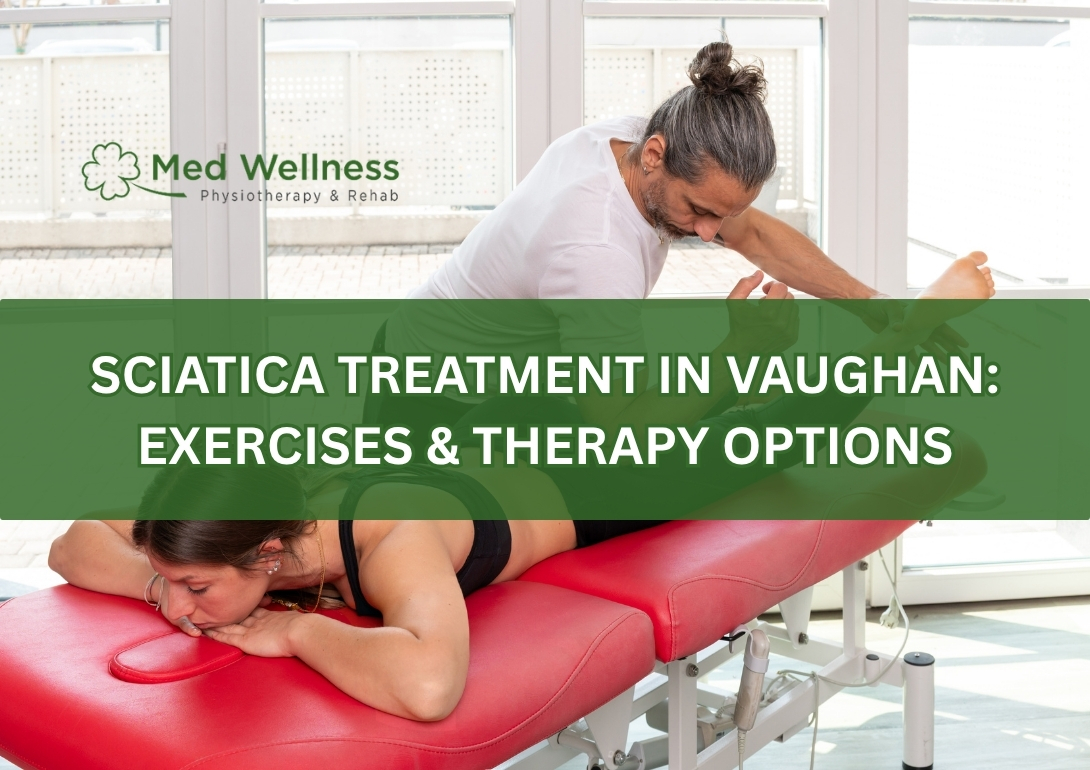
Physiotherapy is one of the most effective non-surgical treatments for sciatica. Treatment focuses on reducing nerve pressure, improving spinal movement, and strengthening muscles that support the lower back.
At Med Wellness Physiotherapy and Rehab Centre, physiotherapy programs are customized based on the patient’s condition and pain severity.
Physiotherapy treatment may include:
- stretching exercises,
- mobility training,
- posture correction,
- strengthening exercises,
- manual therapy,
- guided rehabilitation programs.
The goal is not only pain relief but also preventing future flare-ups.
Best Exercises for Sciatica Relief
Exercises play a major role in sciatica recovery. Proper movement helps improve flexibility, reduce muscle tension, and support spinal alignment.
Here are some commonly recommended exercises for sciatica relief.
Knee-to-Chest Stretch
This stretch helps reduce lower back tension and improve flexibility.
How to Perform:
- Lie flat on your back.
- Bend one knee and pull it gently toward your chest.
- Hold for 20–30 seconds.
- Repeat on both sides.
Benefits:
- stretches lower back muscles,
- reduces pressure on nerves,
- improves flexibility.
Piriformis Stretch
The piriformis muscle can irritate the sciatic nerve when tight.
How to Perform:
- Lie on your back with knees bent.
- Cross one ankle over the opposite knee.
- Pull the supporting leg toward your chest.
- Hold for 20–30 seconds.
Benefits:
- relieves hip tension,
- improves mobility,
- reduces nerve irritation.
Cat-Cow Stretch
This gentle movement improves spinal flexibility.
How to Perform:
- Start on hands and knees.
- Arch your back upward slowly.
- Lower your stomach while lifting your head.
- Repeat slowly several times.
Benefits:
- improves spinal movement,
- reduces stiffness,
- helps posture correction.
Pelvic Tilt Exercise
This exercise strengthens core muscles that support the spine.
How to Perform:
- Lie on your back with knees bent.
- Tighten abdominal muscles.
- Flatten the lower back against the floor.
- Hold for a few seconds and release.
Benefits:
- strengthens core stability,
- supports spinal alignment,
- reduces lower back strain.
Hamstring Stretch
Tight hamstrings can worsen lower back stress.
How to Perform:
- Sit with one leg extended.
- Reach gently toward your toes.
- Hold for 20–30 seconds.
Benefits:
- improves leg flexibility,
- reduces lower back pressure,
- supports better posture.
Spinal Therapy for Sciatica
Spinal therapy helps improve spinal alignment and reduce stress on the sciatic nerve. Poor posture and spinal stiffness are common contributors to sciatica symptoms.
Spinal therapy may help:
- reduce nerve compression,
- improve posture,
- increase flexibility,
- reduce lower back tension,
- improve movement.
When combined with physiotherapy exercises, spinal therapy can support faster recovery.
Massage Therapy for Sciatica Pain
Massage therapy helps relax tight muscles surrounding the lower back and hips. Muscle tension often increases nerve irritation and discomfort.
Benefits of massage therapy include:
- improved blood circulation,
- reduced muscle stiffness,
- relaxation of tight tissues,
- stress reduction,
- improved mobility.
Massage therapy is often used alongside physiotherapy to improve overall treatment results.
Shockwave Therapy for Chronic Sciatica
Shockwave therapy is a non-invasive treatment used to stimulate healing in painful tissues. It may help patients experiencing chronic muscle tightness and persistent pain.
Benefits of shockwave therapy include:
- improved blood flow,
- reduced chronic pain,
- faster tissue healing,
- reduced inflammation,
- improved mobility.
Patients with long-term lower back discomfort may benefit from combining shockwave therapy with rehabilitation exercises.
Lifestyle Tips to Prevent Sciatica Flare-Ups
Preventing future sciatica episodes is an important part of recovery.
Helpful lifestyle habits include:
- maintaining proper posture,
- avoiding prolonged sitting,
- stretching regularly,
- staying physically active,
- using ergonomic chairs,
- lifting objects properly,
- strengthening core muscles.
Small daily habits can significantly reduce pressure on the lower back and sciatic nerve.
When Should You See a Physiotherapist?
You should consider professional treatment if:
- pain lasts more than a few days,
- numbness increases,
- walking becomes difficult,
- pain spreads down the leg,
- symptoms interfere with work or sleep,
- home exercises do not help.
Delaying treatment may increase recovery time and worsen symptoms.
Why Patients Choose Med Wellness Physiotherapy and Rehab Centre
Patients looking for sciatica treatment in Vaughan often choose Med Wellness Physiotherapy and Rehab Centre because of its comprehensive rehabilitation services and personalized treatment approach.
The clinic offers:
- physiotherapy,
- spinal therapy,
- massage therapy,
- shockwave therapy,
- rehabilitation exercises,
- personalized recovery programs.
The focus is on reducing pain naturally while improving long-term mobility and wellness.
Final Thoughts
Sciatica pain can affect daily life, work performance, and overall comfort. Fortunately, non-surgical treatments such as physiotherapy, exercises, spinal therapy, massage therapy, and shockwave therapy can help reduce pain and restore movement naturally.
Early treatment and consistent rehabilitation are important for long-term recovery and preventing recurring flare-ups.
If you are looking for professional sciatica treatment in Vaughan, personalized rehabilitation programs at Med Wellness Physiotherapy and Rehab Centre can help support your recovery journey safely and effectively.
Clinic Information
Med Wellness Physiotherapy and Rehab Centre
Address: 110 Ansley Grove Rd, Woodbridge, ON L4L 3R1, Canada
Phone: +1 905-605-8889
website: https://medwellnesscentre.ca/
Email Id: medwellnesscentre@gmail.com..